Common CV Mistakes That Are Costing You Interviews (Without You Realising)
If you’re applying for roles and not getting interview calls, it’s easy to assume: The market is bad There’s too much competition You’re not qualified enough But in many cases, the real issue is far simpler and far more fixable.
Small CV mistakes can quietly eliminate you from consideration before a recruiter ever speaks to you, even when your experience is strong.
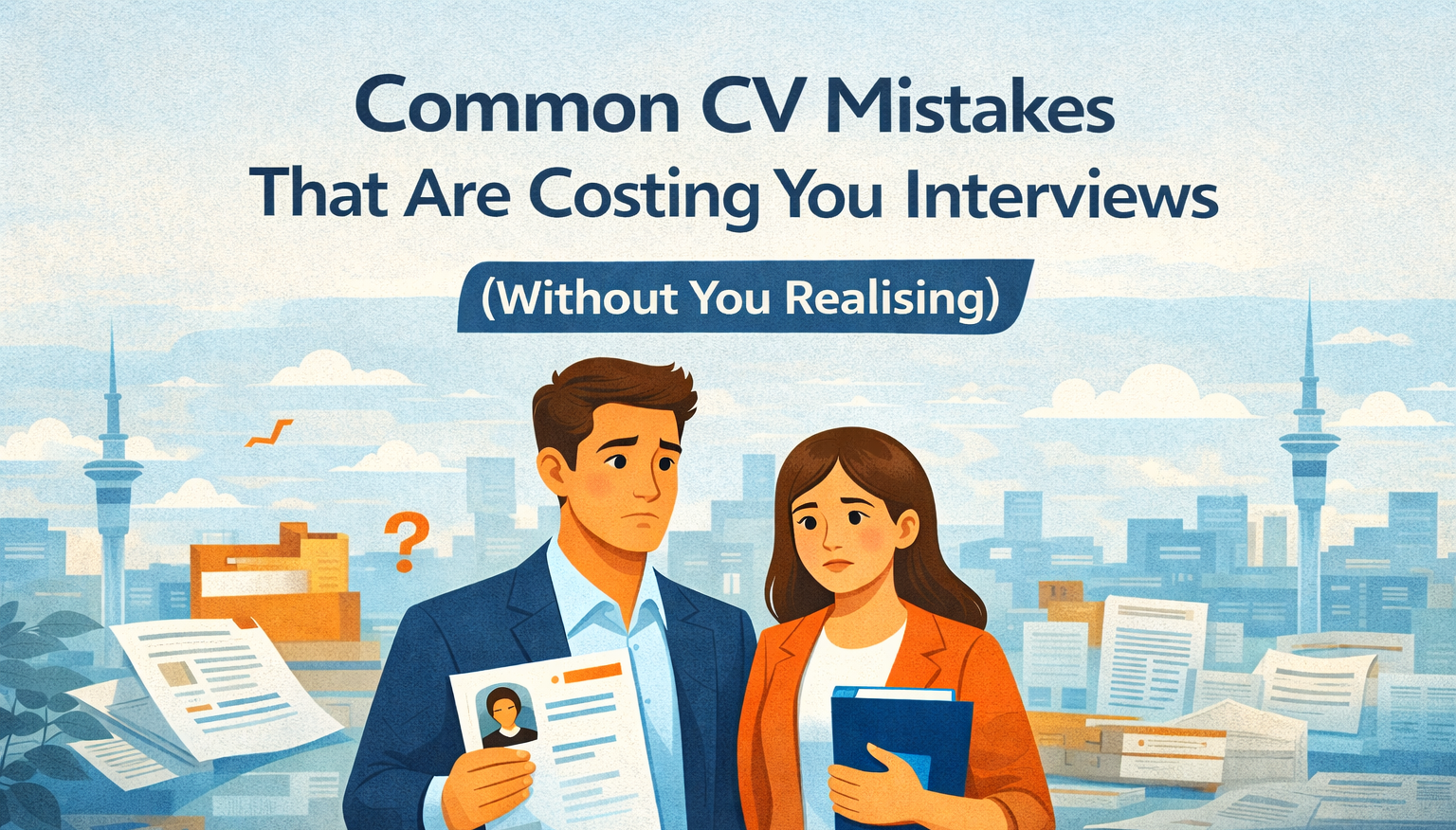
1. Using One Generic CV for Every Job
One of the most common (and costly) mistakes is sending the same CV to every role.
Recruiters expect to see:
Alignment to the specific role
Relevant skills clearly prioritised
Keywords that match the job description
A generic CV often feels unfocused and fails Applicant Tracking System (ATS) scans.
📌 If it looks like it could be sent to any role, it’s unlikely to stand out for this one.
2. Listing Responsibilities Instead of Results
Many CVs read like job descriptions instead of achievements.
For example:
“Responsible for managing projects and stakeholders”
This tells a recruiter what you did, but not how well you did it.
Stronger CVs highlight:
Outcomes
Impact
Measurable results
Even small improvements, efficiencies, or contributions matter.
3. Poor Formatting That Makes CVs Hard to Read
Recruiters typically scan a CV in seconds.
Common formatting issues include:
Dense blocks of text
Overdesigned layouts that confuse ATS systems
Inconsistent fonts, spacing, or headings
If a recruiter can’t quickly see:
Who you are
What you do
Whether you’re relevant
…the CV is often skipped.
4. Missing or Incorrect Keywords (ATS Rejections)
Many job seekers don’t realise their CV is first read by software, not a person.
ATS systems scan for:
Skills
Job titles
Industry terminology
If your CV doesn’t reflect the language used in the job ad, it may be automatically filtered out - regardless of experience.
This is one of the biggest invisible reasons candidates don’t get interviews.
5. A Weak or Outdated Personal Summary
Your summary sets the tone for the entire CV.
Weak summaries:
Are vague or generic
Focus only on years of experience
Don’t clearly state value
A strong summary quickly answers:
Who you are
What you specialise in
What you bring to an employer
If this section doesn’t hook the reader, they may not read further.
6. Including Too Much (or Too Little) Information
More is not always better.
Common issues:
CVs that are too long and unfocused
Including outdated or irrelevant roles
Leaving out key achievements
Your CV should be:
Relevant
Targeted
Easy to follow
Every section should earn its place.
7. Not Updating Your CV for Today’s Market
The job market evolves and so should your CV.
What worked five years ago may no longer work today.
Recruiters now expect:
Clear career direction
Strong alignment to roles
A CV that complements your LinkedIn profile
An outdated CV can quietly work against you.
Your CV Is a Marketing Document - Not a Biography
Your CV’s purpose is simple:
Secure the interview.
It’s not about telling your full career story, it’s about positioning your experience in the strongest possible way for the role you want.
A Professional CV Review Can Change Everything
A CV review helps identify:
Why you’re not getting interviews
Where your CV is losing impact
How to improve clarity, structure, and positioning
Often, small changes make a big difference.
📄 Book a professional CV review and ensure your CV is working for you - not against you.