How Immigration Advisers Can Help Clients Follow Up Professionally After Interviews
Introduction: The Interview Is Not Always the Final Step Many migrants believe that once an interview ends, all they can do is wait and hope for a response. But professional follow-up can play an important role in how candidates are remembered by employers and recruiters.
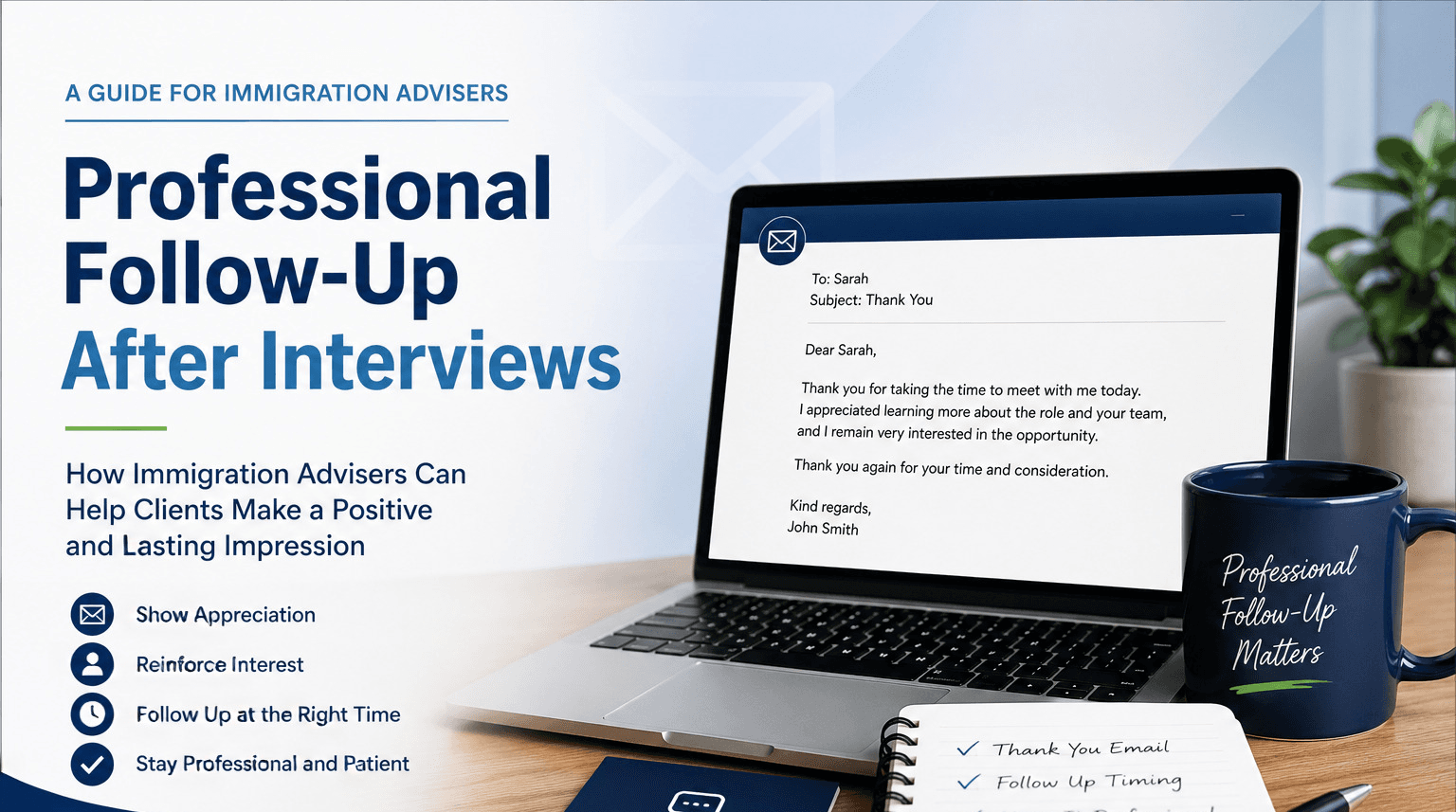
A thoughtful follow-up message can help reinforce:
Professionalism
Communication skills
Genuine interest in the role
Reliability
Confidence and initiative
At the same time, poor follow-up can unintentionally damage a candidate’s impression.
For immigration advisers supporting employment outcomes, teaching clients how to follow up appropriately after interviews can help them navigate the NZ job market more confidently and professionally.
Why Follow-Up Matters in New Zealand Recruitment
In New Zealand’s relationship-driven job market, professionalism and communication matter significantly.
Following up after an interview can:
Show appreciation for the interviewer’s time
Reinforce enthusiasm for the role
Keep the candidate top of mind
Demonstrate communication skills
Leave a positive final impression
While a follow-up will not guarantee a job offer, it can strengthen a candidate’s overall presentation.
Common Mistakes Migrants Make After Interviews
Many migrants either:
Do not follow up at all
Follow up too aggressively
Send overly emotional messages
Ask repeatedly for updates
Contact multiple staff members excessively
These actions can sometimes create discomfort for employers or recruiters.
Immigration advisers can help clients understand the balance between professional interest and excessive pressure.
When Should Clients Follow Up?
A simple thank-you message is usually best sent:
Within 24 hours after the interview
If the employer provided a timeframe for feedback, clients should generally wait until after that timeframe before requesting updates.
Example:
If an employer says:
“We will get back to you next week”
Encourage clients not to follow up again the very next day.
Patience and professionalism matter.
What a Good Follow-Up Message Should Include
A strong follow-up message should be:
Short
Polite
Professional
Positive
Genuine
It should typically include:
Appreciation for the interview
Continued interest in the role
A brief positive comment
A professional closing
The goal is to reinforce professionalism, not pressure the employer.
Example of a Professional Follow-Up Message
Dear Sarah,
Thank you for taking the time to meet with me today regarding the Customer Service Coordinator position.
I appreciated learning more about the role and your team, and I remain very interested in the opportunity.
Thank you again for your time and consideration.
Kind regards,
John Smith
Simple, respectful communication is often most effective.
Teach Clients Not to Over-Follow-Up
One of the most common mistakes candidates make is sending too many messages after an interview.
Examples include:
Following up daily
Calling repeatedly
Asking for immediate decisions
Sending emotional messages after delays
Contacting employers on multiple platforms
This can unintentionally create pressure and damage professional impressions.
Better Approach
Encourage clients to:
Follow up once professionally
Respect timelines given
Remain patient
Continue applying for other opportunities
Professional persistence is different from pressure.
How to Handle No Response
Unfortunately, many candidates experience silence after interviews.
This can feel especially discouraging for migrants already facing uncertainty and rejection during the job search process.
Immigration advisers can help clients understand:
Non-response is common in recruitment
Silence is not always personal
Hiring processes can take time
Recruiters may be managing many applicants
Encourage clients to remain professional even if disappointed.
Burning bridges or sending emotional responses can harm future opportunities.
Helping Clients Respond to Rejection Professionally
Rejection can be difficult, especially after multiple unsuccessful interviews.
However, professional responses can still leave a positive impression for future opportunities.
Example:
Thank you for letting me know.
I appreciate the opportunity to interview for the role and wish your team all the best.
I would welcome the opportunity to be considered for future positions.
Professional maturity matters.
Sometimes rejected candidates are contacted later for other opportunities.
Encourage Clients to Reflect After Interviews
Following interviews, clients should also review:
What questions they struggled with
What went well
Areas for improvement
Communication confidence
Industry knowledge gaps
This helps candidates improve gradually with each interview experience.
Immigration advisers can support clients by encouraging continuous learning rather than viewing interviews only as pass-or-fail experiences.
Why This Support Matters for Migrants
Many migrants are unfamiliar with:
NZ workplace culture
Recruitment communication styles
Employer expectations
Professional follow-up etiquette
Without guidance, even highly skilled candidates may unintentionally make mistakes that affect employer impressions.
Providing practical employment support helps clients feel more confident and prepared throughout the job search process.
How Immigration Advisers Add Long-Term Value
Immigration advisers who support employment readiness provide value far beyond visa applications.
Helping clients navigate interviews and professional communication can:
Improve employment outcomes
Increase client confidence
Strengthen trust and referrals
Improve settlement success
Differentiate the business from competitors
For many migrants, finding employment is one of the most important milestones in building stability in New Zealand.

Final Thoughts
Following up after an interview may seem like a small step, but it can contribute to a candidate’s overall professional impression.
The most effective follow-up communication is:
Respectful
Concise
Professional
Patient
Genuine
Many migrants already have the qualifications and experience employers are looking for, they simply need guidance in navigating professional communication and NZ recruitment expectations.
By helping clients follow up professionally after interviews, immigration advisers can play an important role in helping migrants build stronger relationships, better confidence, and improved career opportunities in New Zealand.