How Immigration Firms Can Support Clients After Interview Rejection
Introduction: The Emotional Impact of Rejection For many migrants, job interviews represent far more than employment opportunities.
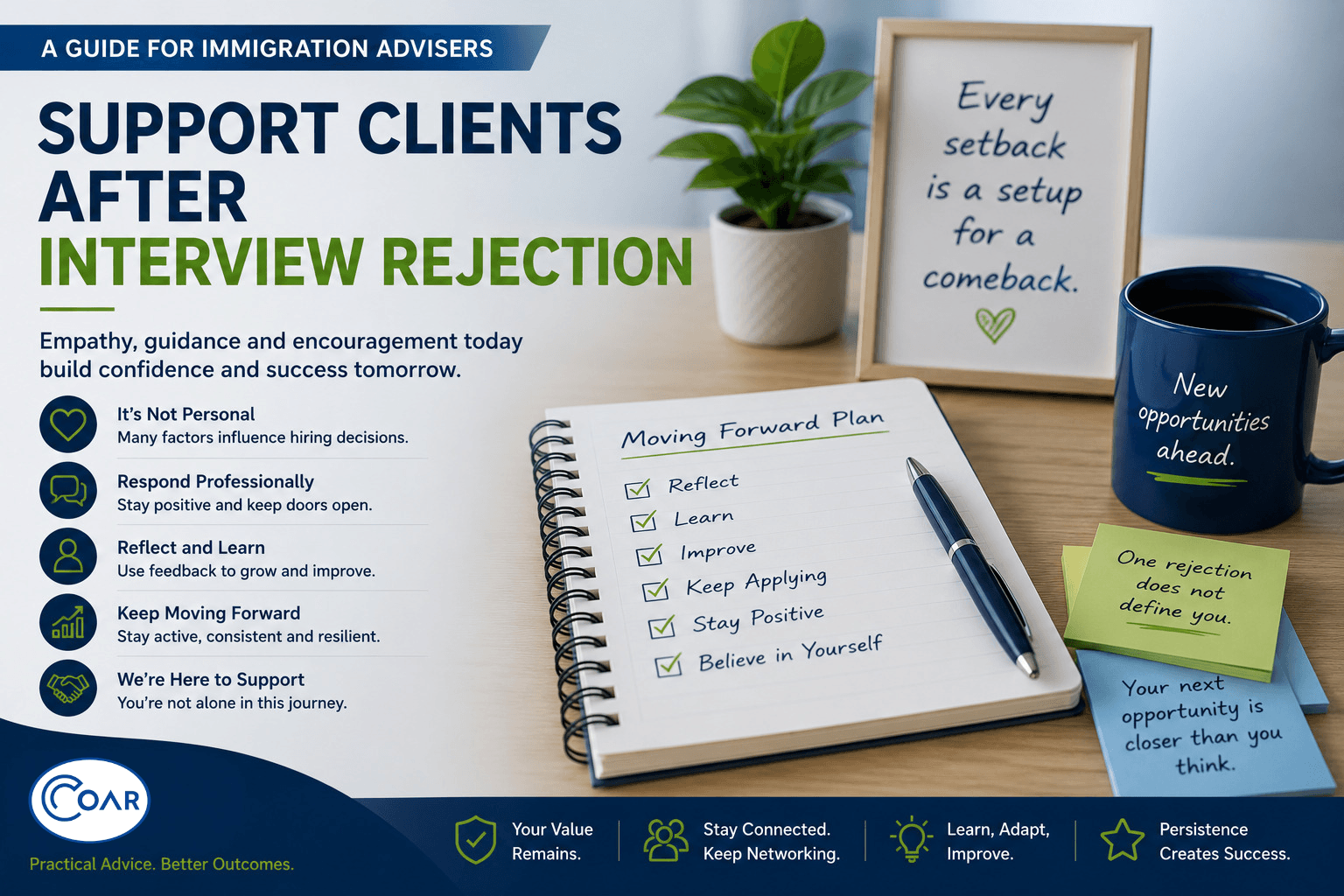
They are often connected to:
Financial stability
Visa pathways
Family security
Confidence
Long-term settlement plans
Personal identity and self-worth
This is why rejection after a final interview can feel especially devastating.
After investing time, energy, hope, and emotional preparation, many clients struggle with disappointment, frustration, and self-doubt when they are unsuccessful.
For immigration advisers and migrant support professionals, understanding how to support clients after rejection is incredibly important, not only for employment outcomes, but also for confidence and long-term resilience.
Why Final Interview Rejection Feels So Difficult
By the final interview stage, candidates often begin imagining success.
They may already:
Picture themselves in the role
Feel emotionally invested
Stop applying elsewhere
Share the news with family
Attach the opportunity to migration goals
When rejection happens at this stage, clients may feel:
Embarrassed
Discouraged
Angry
Hopeless
Personally rejected
Immigration advisers can help clients understand an important reality:
Reaching the final interview stage already means the employer saw strong potential.
That alone is significant progress.
Remind Clients That Rejection Does Not Always Mean Failure
Many hiring decisions come down to factors outside a candidate’s control.
Employers may choose another candidate because of:
Slightly more local experience
Industry-specific experience
Internal hiring decisions
Team fit
Timing
Budget changes
Existing relationships or referrals
Often, multiple final candidates are highly capable.
Not being selected does not mean the client lacked value or potential.
Encourage Clients Not to Take Rejection Personally
Migrants already navigating relocation, cultural adjustment, and uncertainty can easily internalise rejection.
Some clients begin believing:
“I’m not good enough.”
“No one will hire migrants.”
“My overseas experience doesn’t matter.”
“I’ll never find sponsorship.”
These thoughts can quickly damage confidence and motivation.
Immigration advisers can provide valuable perspective by helping clients separate:
A hiring decision
fromTheir overall professional worth
One rejection does not define future success.
Help Clients Respond Professionally
How a client responds to rejection matters.
Professional responses help preserve relationships and leave positive impressions for future opportunities.
Example:
Thank you for letting me know.
I appreciate the opportunity to interview for the role and enjoyed learning more about your team.
I wish you all the best and would welcome consideration for future opportunities.
Professional maturity can leave doors open later.
In some cases, rejected finalists are contacted again when new roles become available.
Encourage Clients to Request Feedback Professionally
Constructive feedback can help clients improve future interviews.
However, clients should request feedback respectfully and without pressure.
Example:
If possible, I would appreciate any feedback that may help me improve in future opportunities.
Not all employers provide feedback, but when they do, it can be extremely valuable.
Help Clients Reflect Constructively
After rejection, many candidates either:
Blame themselves entirely
orAvoid reflecting at all
Instead, encourage balanced reflection.
Helpful questions include:
What parts of the interview went well?
Which questions felt difficult?
Did they prepare enough examples?
Were communication skills clear and confident?
Did nerves affect performance?
Is there anything they could improve next time?
Constructive reflection helps clients grow rather than lose confidence.
Encourage Clients to Keep Momentum
One of the biggest mistakes candidates make after a promising interview is stopping their job search entirely.
This can make rejection feel even more crushing.
Encourage clients to:
Continue applying while interviewing
Keep networking
Stay active on LinkedIn
Continue improving CVs and interview skills
Maintain routines and consistency
Momentum helps reduce emotional setbacks and keeps opportunities moving forward.
Remind Clients That Rejection Is Part of the NZ Job Market
Even highly experienced professionals face rejection.
This is especially true in:
Competitive industries
Economic slowdowns
Entry-level transitions
Migrant job searches
Many successful migrants experienced:
Multiple rejections
Long job searches
Delayed opportunities
Career setbacks before success
Persistence is often part of the process.
Why Emotional Support Matters for Migrants
Employment rejection affects more than careers.
It can impact:
Mental wellbeing
Family stress
Financial pressure
Confidence
Sense of belonging
Migrants often face these challenges with limited support systems.
Immigration advisers who provide encouragement and practical guidance can have a meaningful impact during difficult periods.
How Immigration Firms Can Add Long-Term Value
Immigration firms that support clients through employment setbacks build stronger trust and relationships.
Providing career-focused support can:
Improve client confidence
Strengthen loyalty and referrals
Improve settlement outcomes
Differentiate services
Position the firm as genuinely supportive
Clients often remember the professionals who supported them during difficult moments, not only during successful ones.

Final Thoughts
Being rejected after a final interview can feel incredibly discouraging, especially for migrants working hard to rebuild careers and stability in New Zealand.
But rejection does not erase:
Skills
Experience
Potential
Professional value
Many successful careers are built after multiple setbacks, redirections, and disappointments.
By helping clients process rejection professionally, maintain confidence, and continue moving forward, immigration advisers can play an important role in supporting not only employment success, but long-term resilience and settlement confidence as well.