How to Write a Cover Letter That Actually Gets Read (And Not Ignored)
Cover letters are one of the most misunderstood parts of job applications. Some people skip them completely. Others copy and paste the same one for every job.
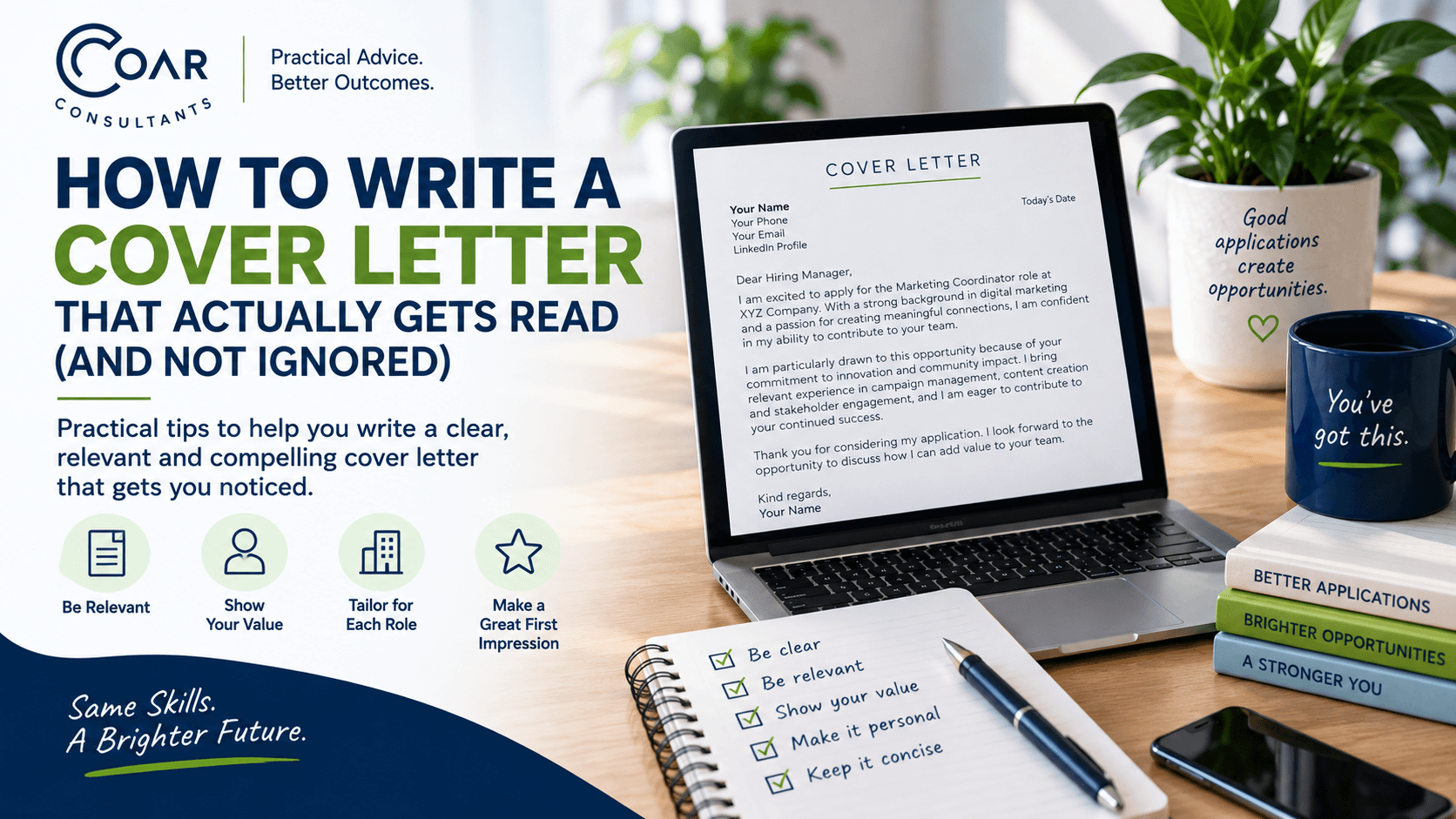
And many spend hours writing them… without getting results.
If you’ve ever wondered whether cover letters even matter, the answer is yes.
But only when they’re done right.
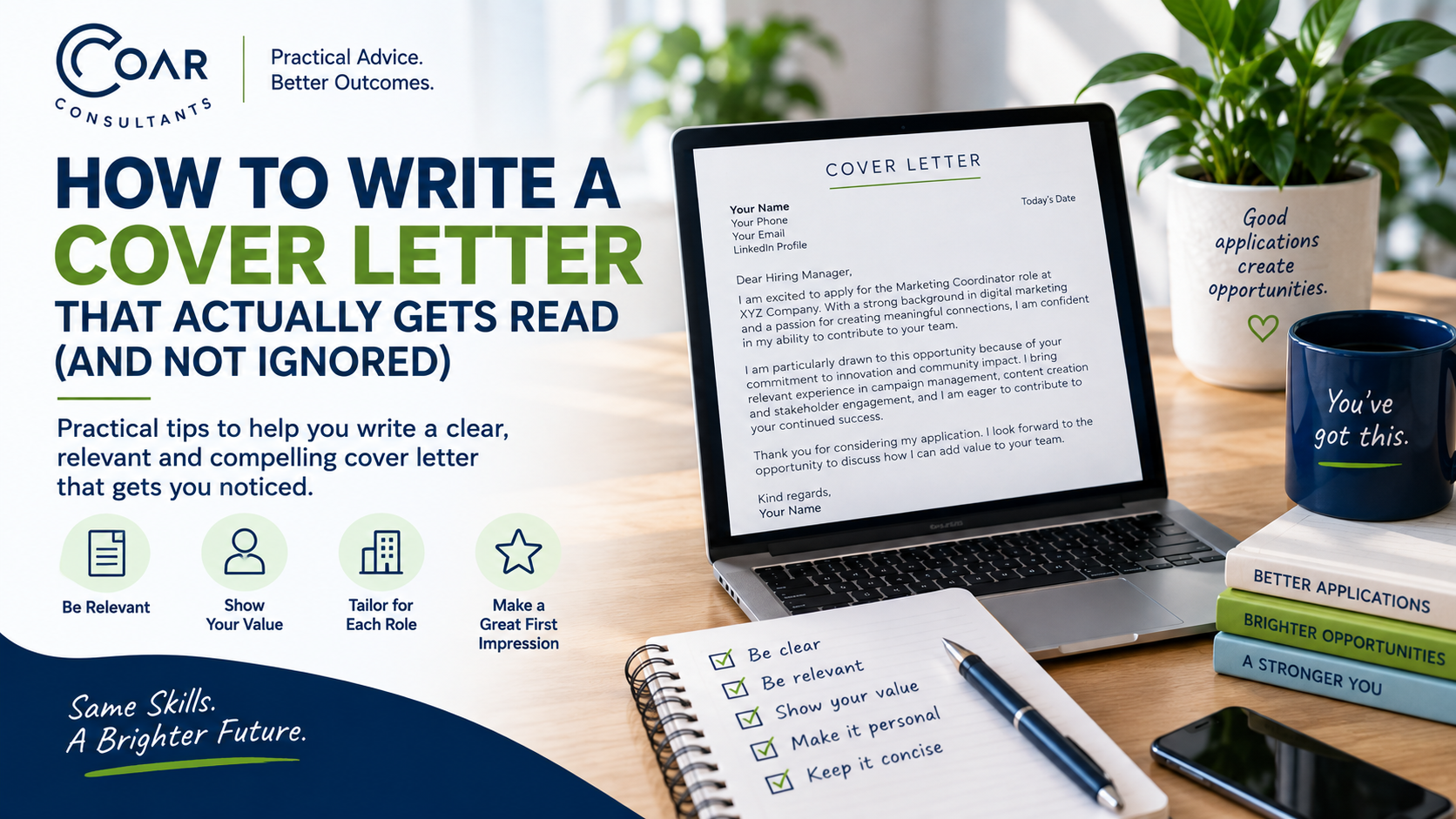
Most Cover Letters Don’t Get Read, Here’s Why
Recruiters don’t have time to read long, generic letters that repeat what’s already in your CV. When a cover letter feels vague or impersonal, it’s often skipped entirely.
What does get attention is a cover letter that feels relevant and intentional. Something that quickly shows why you’re a strong fit for that specific role, not just any job.
A Cover Letter Is Not a Summary of Your CV
This is one of the most common mistakes.
Your CV already explains your experience.
Your cover letter should explain:
Why this role
Why this company
Why you
It’s your chance to connect the dots, not repeat them.
Start Strong, Because That’s What Gets Read
The first few lines matter most.
Instead of starting with:
“I am applying for the position of…”
Start with:
A clear statement of what you do
Your key strength
Or your enthusiasm for the role
This immediately grabs attention and sets the tone.
Focus on Relevance, Not Everything
You don’t need to include your entire career story.
Focus on:
2-3 key experiences
Skills that match the role
Achievements that show value
When your letter is focused, it becomes easier to read, and more impactful.
Show That You Understand the Role
A strong cover letter reflects the job description without copying it.
It shows:
You’ve read the role carefully
You understand what’s required
You can connect your experience to those needs
This is what makes a recruiter stop and pay attention.
Keep It Clear, Professional, and Human
A good cover letter doesn’t need to sound overly formal or complicated. In fact, the more natural and clear your writing is, the easier it is for someone to connect with it.
Think of it as a professional conversation, structured, respectful, but still human. When your personality comes through in a genuine way, it helps build a stronger impression.
Length Matters More Than You Think
Your cover letter should be concise.
Around 3-4 short paragraphs is enough.
Too long, and it won’t be read.
Too short, and it may feel incomplete.
Balance is key.
Generic Cover Letters Get Ignored
Recruiters can tell when a cover letter has been reused.
Lack of personalisation shows:
Low effort
Low interest
Low alignment
Even small adjustments can make a big difference.
You’re Not Bad at Writing, You Might Just Need Structure
If you’ve struggled with cover letters before, it doesn’t mean you can’t write.
It usually means:
You weren’t sure what to include
You didn’t have a clear approach
And that’s something you can fix.
You Don’t Have to Figure This Out Alone
Writing about yourself isn’t always easy, especially when you’re trying to stand out.
With the right support, you can:
Understand what employers are looking for
Identify the experience and skills worth highlighting
Tailor your cover letter to each role
Communicate your value more clearly
Feel more confident about your applications
A cover letter doesn't need to be perfect.
It needs to be relevant, genuine and focused on the value you can bring to the role.

Final Thoughts
A strong cover letter won't guarantee an interview, but a well-written, relevant one can make it easier for an employer to understand why you're worth considering.
Instead of sending the same generic letter with every application, take the time to connect your experience with the specific role you're applying for.
Remember:
Your CV tells employers what you've done.
Your cover letter helps explain why it matters.
So before you click “Apply”, take another look at your cover letter.
Is it clear?
Is it relevant?
Does it show why you're a good fit?
A few thoughtful changes could make your next application much stronger.