Interview Confidence: How to Show Up Calm, Clear, and Confident (Even When You’re Nervous)
Interviews make even the most experienced professionals feel anxious. You might know you’re capable. You might have prepared. And yet, the nerves still show up. Interview confidence isn’t about never feeling nervous, it’s about knowing how to manage those nerves and communicate your value clearly.

Confidence Doesn’t Mean Perfection
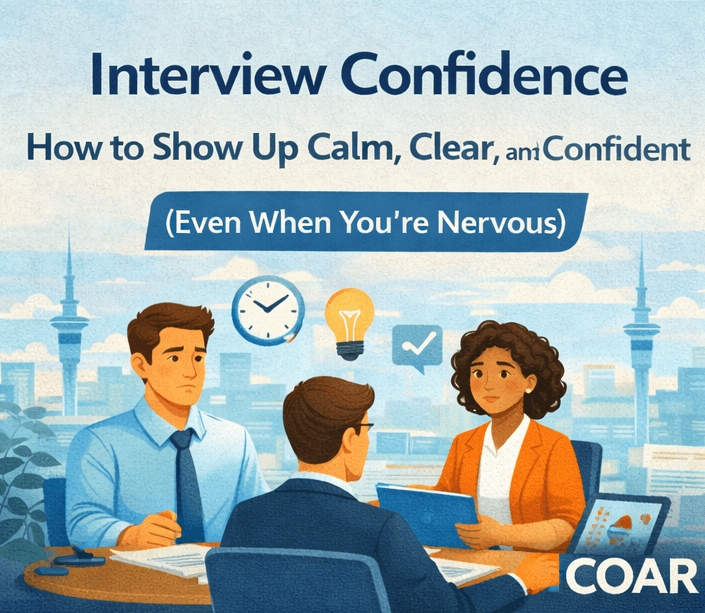
One of the biggest misconceptions about interview confidence is believing you must:
Have perfect answers
Never hesitate
Feel completely calm
In reality, interviewers expect nerves. What they respond to is:
Clarity
Authenticity
Self-awareness
Confidence comes from preparation, not pretending.
Why Interview Nerves Happen
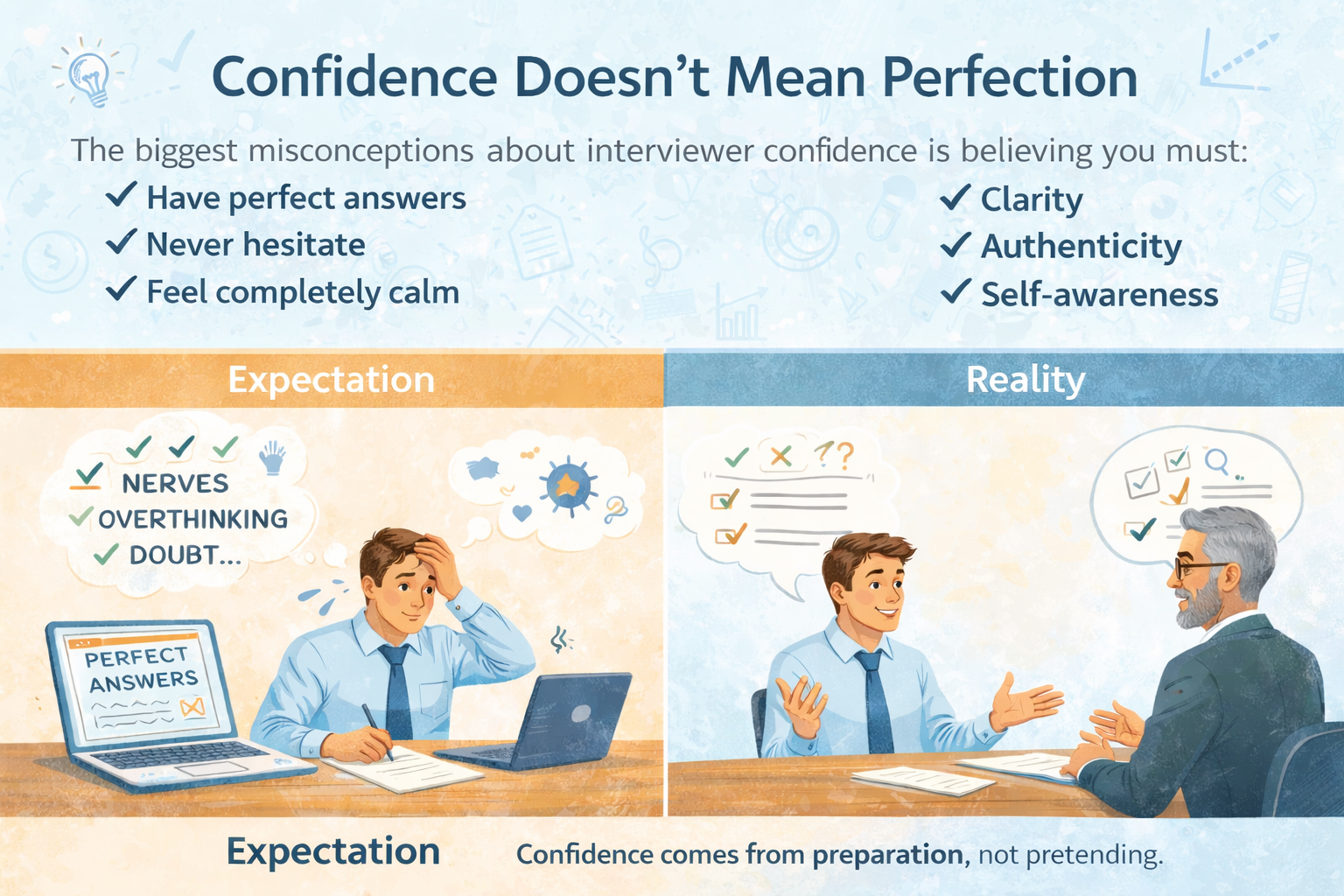
Interviews trigger pressure because:
Outcomes feel high-stakes
You’re being evaluated
You want to make a good impression
This activates a stress response, which can affect memory, speech, and body language.
Understanding this helps you stop seeing nerves as failure.
What Interview Confidence Really Looks Like
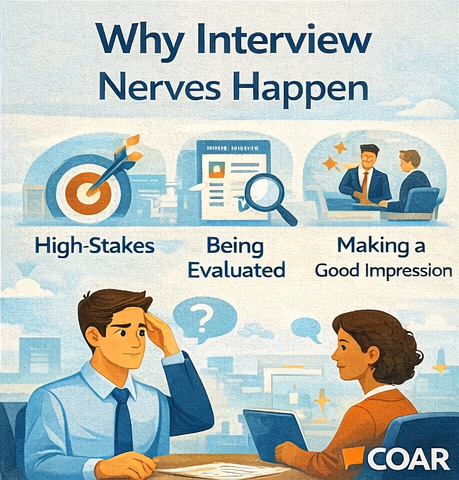
Confident candidates:
Speak clearly, even if they pause
Stay focused on the question
Don’t over-explain or apologise
Redirect conversations back to their strengths
Confidence is communicated through how you answer, not just what you say.
How to Build Interview Confidence Before the Interview
1. Know Your Story
Confidence increases when your career story makes sense to you.
You should be able to clearly explain:
Your career direction
Key transitions
What you’re looking for next
Uncertainty in your story often shows up as nerves.
2. Prepare Structured Answers
Rambling is often a sign of anxiety.
Using simple structures helps you:
Stay on track
Answer clearly
Sound more confident
Practicing structured answers reduces mental load during the interview.
3. Anticipate the Hard Questions
Questions about:
Career gaps
Redundancy
Confidence or weaknesses
…are far less intimidating when you’ve already practiced your response.
Prepared answers create calm.
4. Practice Out Loud (Not Just in Your Head)
Confidence comes from familiarity.
Practicing aloud:
Improves clarity
Builds muscle memory
Reduces panic in the moment
This is one of the most overlooked steps.
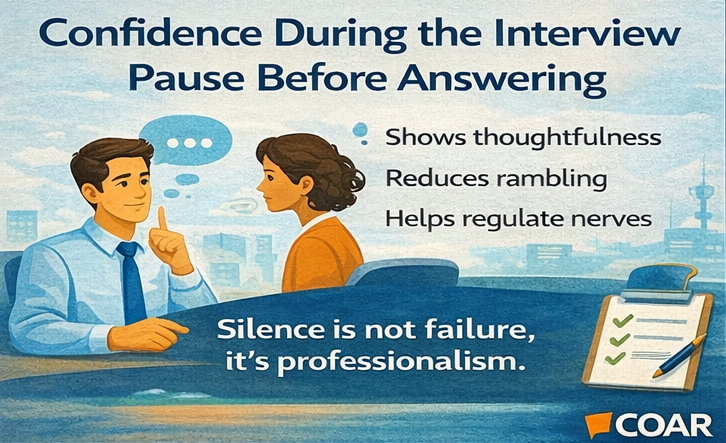
Confidence During the Interview
Pause Before Answering
Taking a brief pause:
Shows thoughtfulness
Reduces rambling
Helps regulate nerves
Silence is not failure, it’s professionalism.
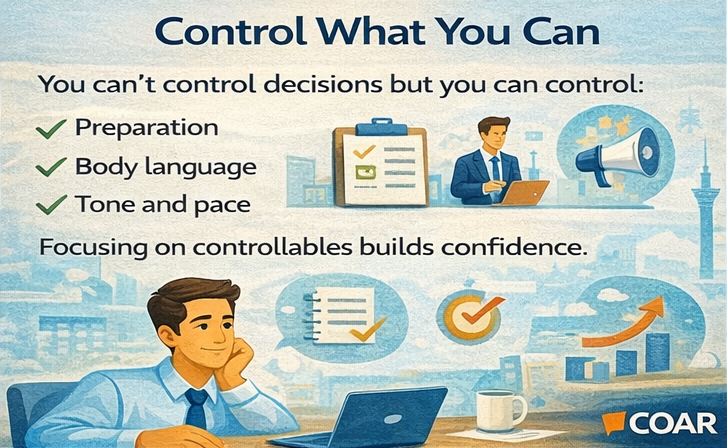
Control What You Can
You can’t control decisions but you can control:
Preparation
Body language
Tone and pace
Focusing on controllables builds confidence.
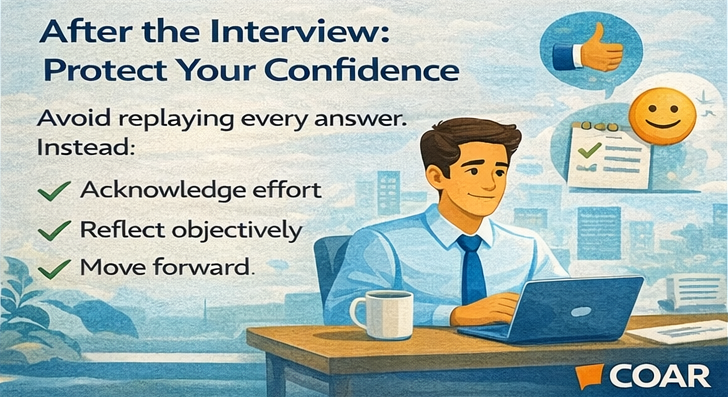
After the Interview: Protect Your Confidence
Avoid replaying every answer.
Instead:
Acknowledge effort
Reflect objectively
Move forward
Confidence is built through repetition, not perfection.
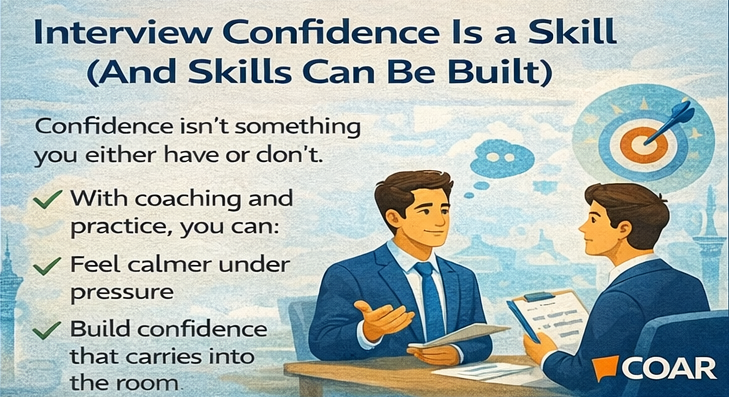
Interview Confidence Is a Skill (And Skills Can Be Built)
Confidence isn’t something you either have or don’t.
With coaching and practice, you can:
Feel calmer under pressure
Communicate your value clearly
Handle tough questions with confidence
Support Makes the Difference
Interview coaching helps you:
Practice realistic interview scenarios
Refine answers
Build confidence that carries into the room

📅 Book a free 20-minute consultation to build interview confidence and show up as your best professional self.