Job Search Burnout Is Real - Here’s How to Stay Motivated Without Giving Up
Job searching can start with hope and motivation but over time, it can quietly turn into exhaustion. You apply. You wait. You hear nothing, or receive rejection after rejection. If you’re feeling tired, discouraged, or emotionally drained, you’re not weak.
You’re experiencing job search burnout and it’s far more common than people admit.
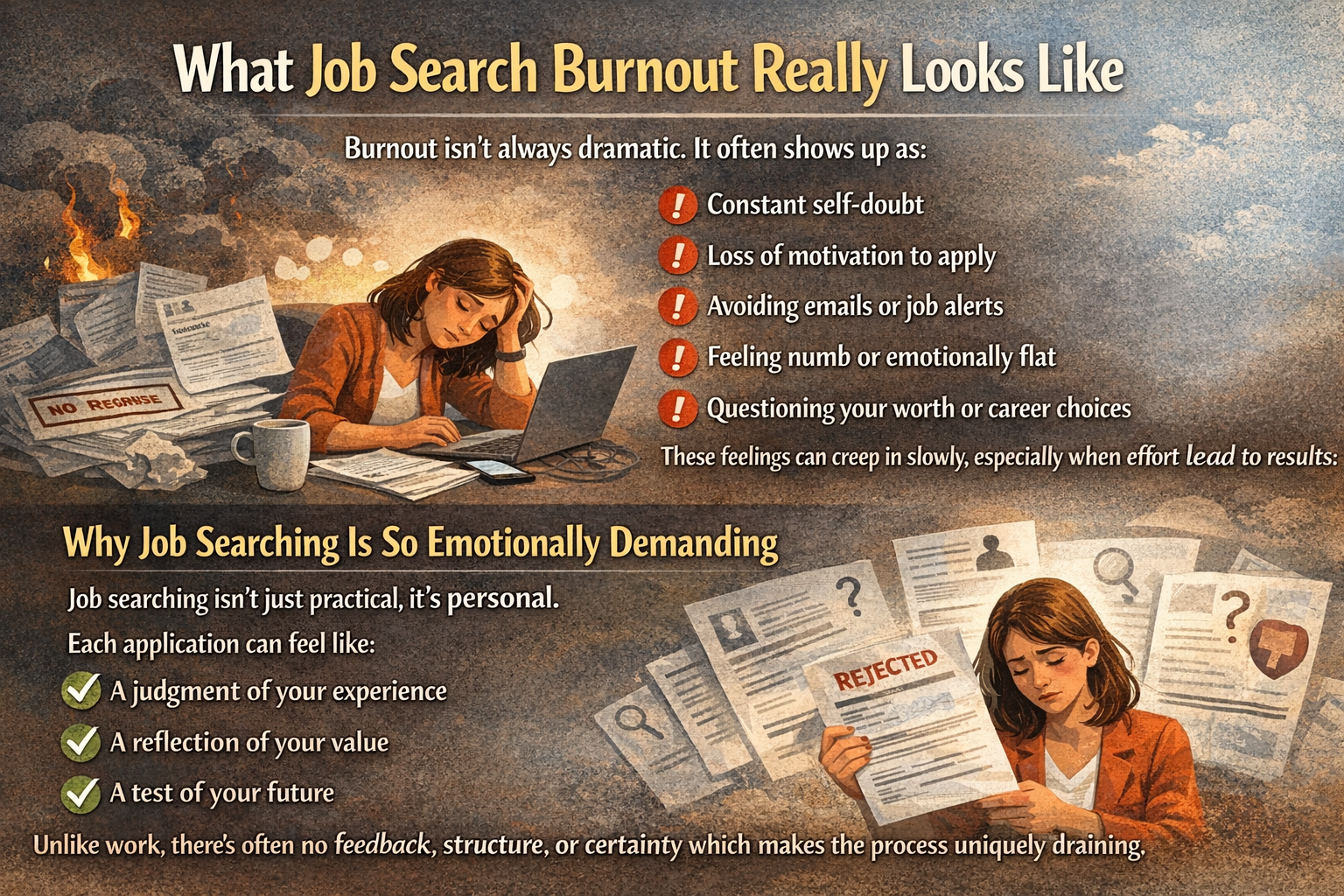
What Job Search Burnout Really Looks Like
Burnout isn’t always dramatic. It often shows up as:
Constant self-doubt
Loss of motivation to apply
Avoiding emails or job alerts
Feeling numb or emotionally flat
Questioning your worth or career choices
These feelings can creep in slowly, especially when effort doesn’t lead to results.
Why Job Searching Is So Emotionally Demanding
Job searching isn’t just practical, it’s personal.
Each application can feel like:
A judgment of your experience
A reflection of your value
A test of your future
Unlike work, there’s often no feedback, structure, or certainty which makes the process uniquely draining.
Pushing Harder Isn’t Always the Answer
Many professionals respond to burnout by trying to do more:
More applications
Longer hours
Less rest
Unfortunately, this often leads to:
Lower-quality applications
Increased anxiety
Faster burnout
Sustainable progress requires a different approach.
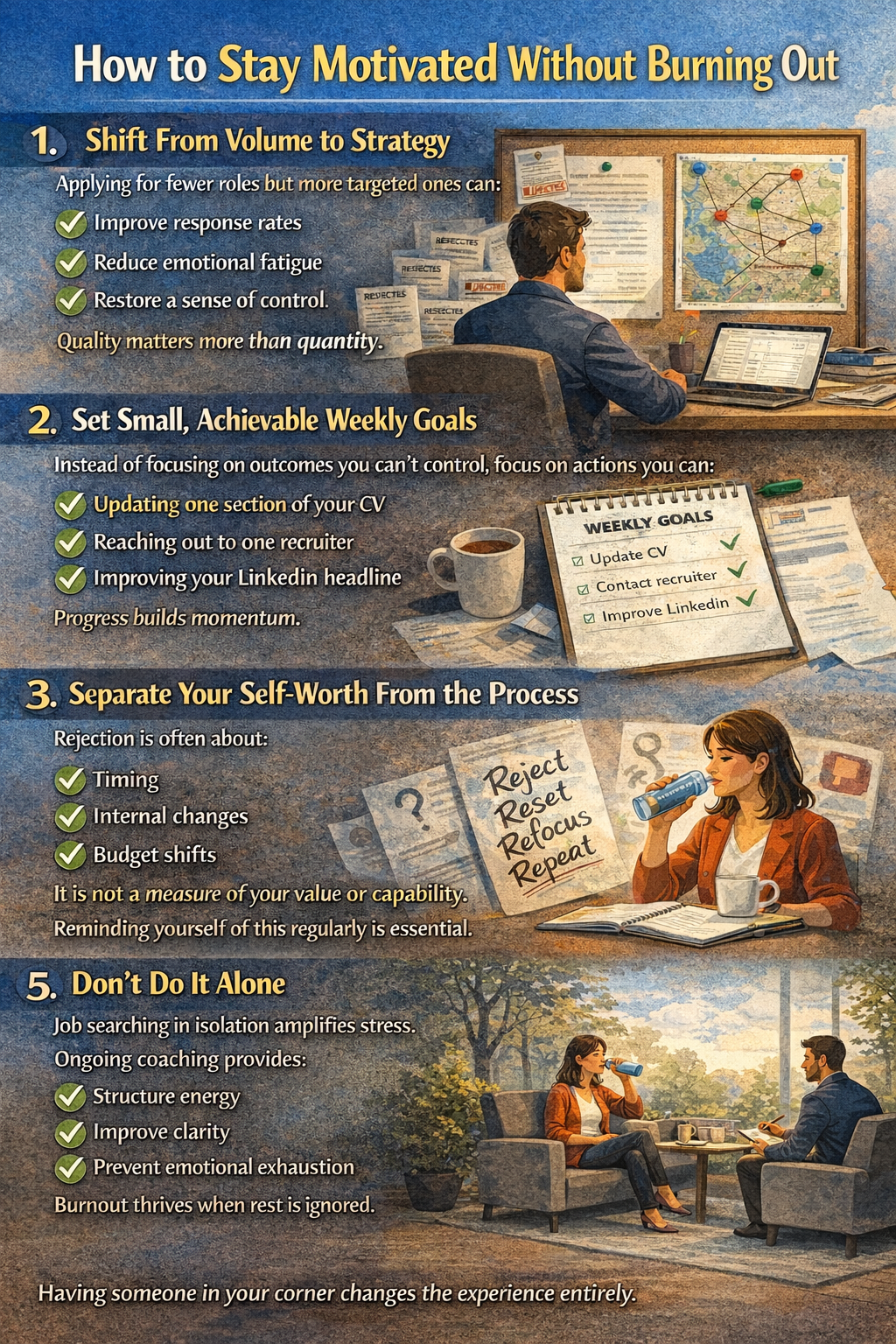
How to Stay Motivated Without Burning Out
1. Shift From Volume to Strategy
Applying for fewer roles but more targeted ones can:
Improve response rates
Reduce emotional fatigue
Restore a sense of control
Quality matters more than quantity.
2. Set Small, Achievable Weekly Goals
Instead of focusing on outcomes you can’t control, focus on actions you can:
Updating one section of your CV
Reaching out to one recruiter
Improving your LinkedIn headline
Progress builds momentum.
3. Separate Your Self-Worth From the Process
Rejection is often about:
Timing
Internal changes
Budget shifts
It is not a measure of your value or capability.
Reminding yourself of this regularly is essential.
4. Take Intentional Breaks (Without Guilt)
Stepping back doesn’t mean giving up.
Planned pauses can:
Restore energy
Improve clarity
Prevent emotional exhaustion
Burnout thrives when rest is ignored.
5. Don’t Do It Alone
Job searching in isolation amplifies stress.
Ongoing coaching provides:
Structure and accountability
Emotional support
Objective guidance
Confidence rebuilding
Having someone in your corner changes the experience entirely.
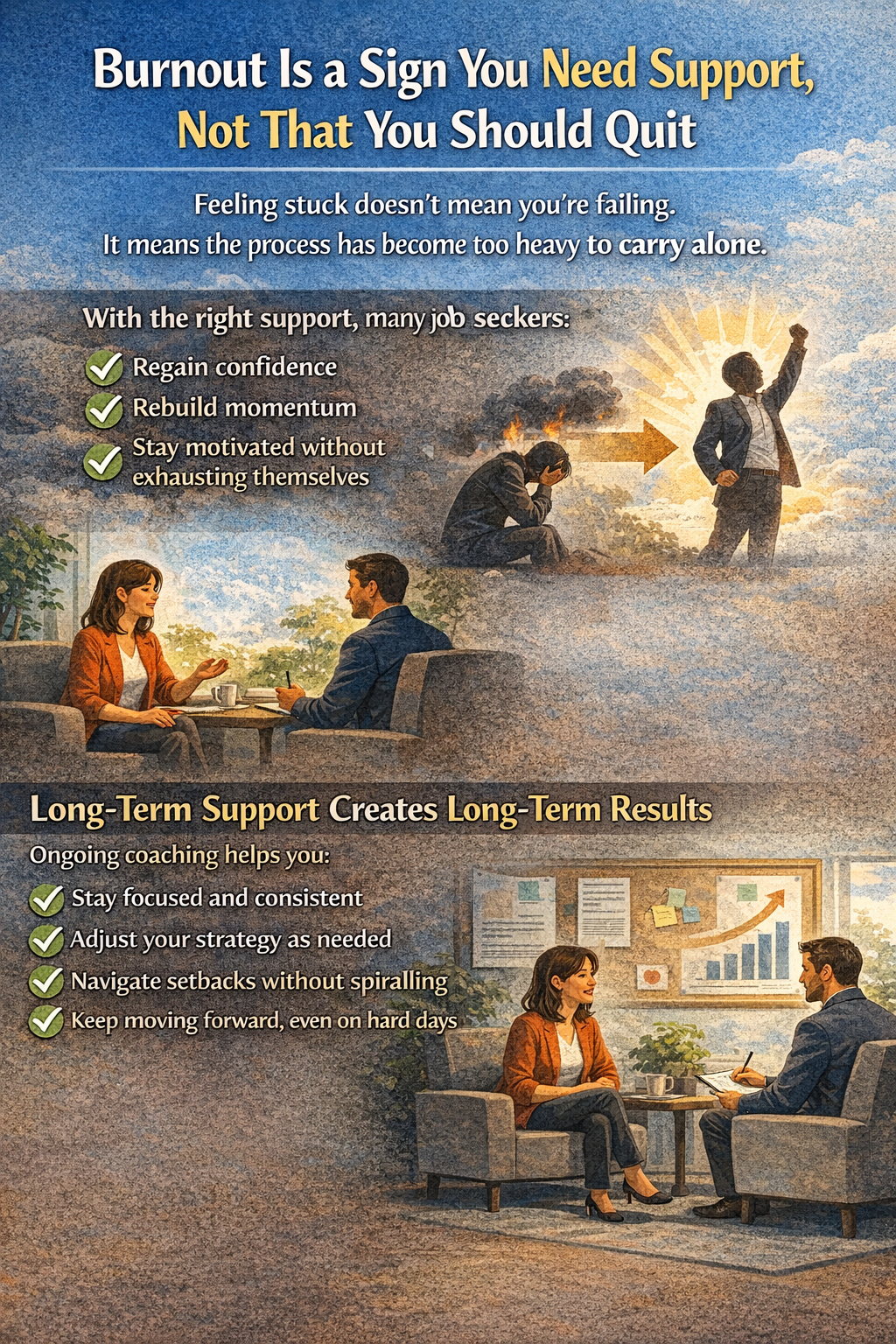
Burnout Is a Sign You Need Support, Not That You Should Quit
Feeling stuck doesn’t mean you’re failing.
It means the process has become too heavy to carry alone.
With the right support, many job seekers:
Regain confidence
Rebuild momentum
Stay motivated without exhausting themselves
Long-Term Support Creates Long-Term Results
Ongoing coaching helps you:
Stay focused and consistent
Adjust your strategy as needed
Navigate setbacks without spiraling
Keep moving forward, even on hard days
📅 Book a free 20-minute consultation to explore ongoing coaching support that meets you where you are and helps you move forward sustainably.