Top 10 Interview Questions in NZ - What Your Clients Need to Be Prepared For
Introduction: Why Interview Preparation Matters For many migrants, interviews can feel far more stressful than submitting applications.
Even highly skilled candidates often struggle with:
Nervousness
Confidence
Language barriers
Understanding NZ workplace culture
Knowing what employers expect
Answering behavioural questions
Many migrants are qualified for the role but lose opportunities because they are unprepared for the interview style commonly used in New Zealand.
For immigration advisers supporting employment outcomes, helping clients prepare for common interview questions can significantly improve confidence, communication, and job readiness.
Understanding the NZ Interview Style
New Zealand employers often value:
Communication skills
Professionalism
Attitude
Teamwork
Problem-solving
Reliability
Cultural fit
Interviews are usually conversational rather than overly formal.
Employers are often assessing:
How the candidate communicates
Whether they can work well with others
How they handle situations at work
Whether they seem adaptable and trustworthy
This can be unfamiliar for migrants from countries where interviews are more rigid or technical.
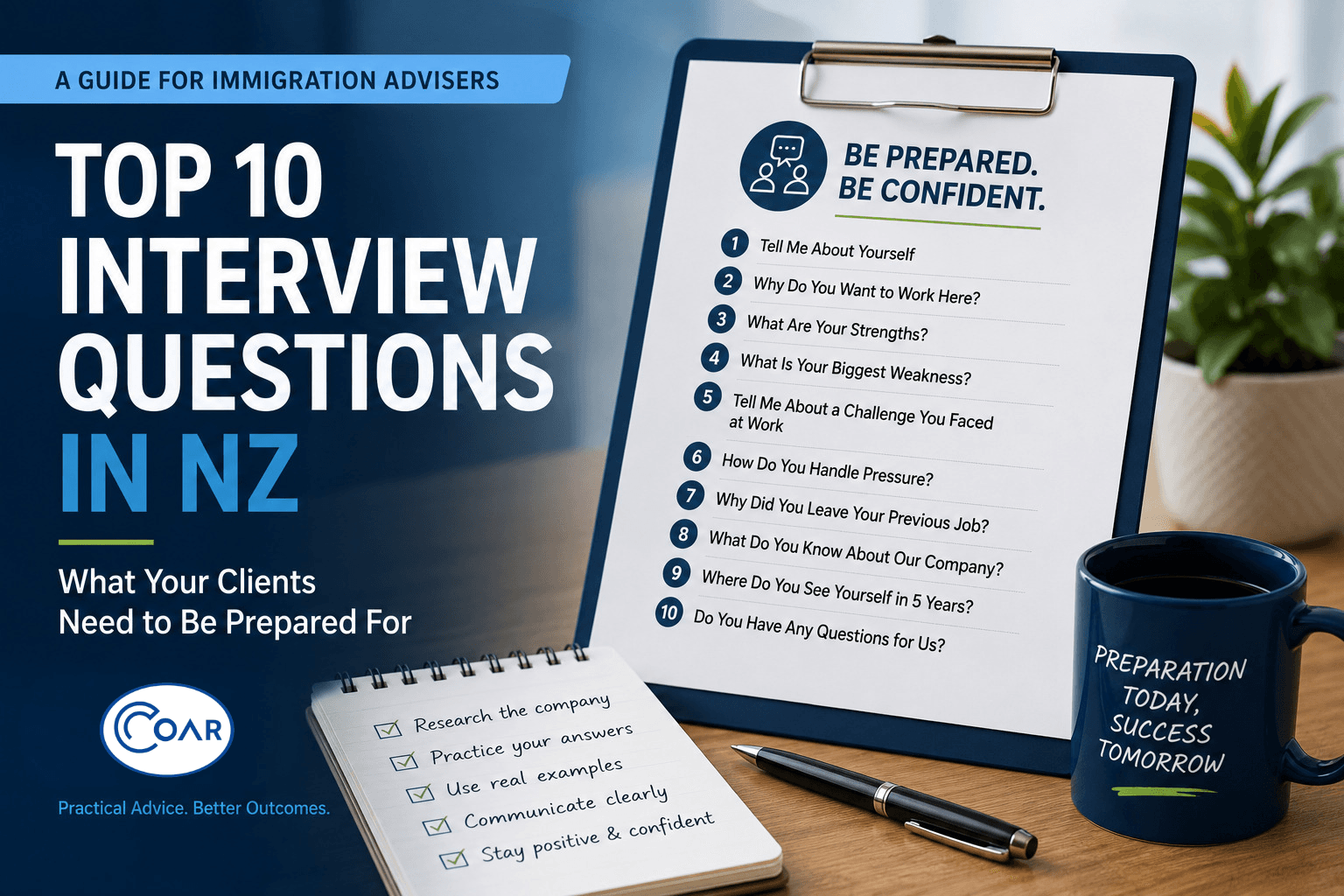
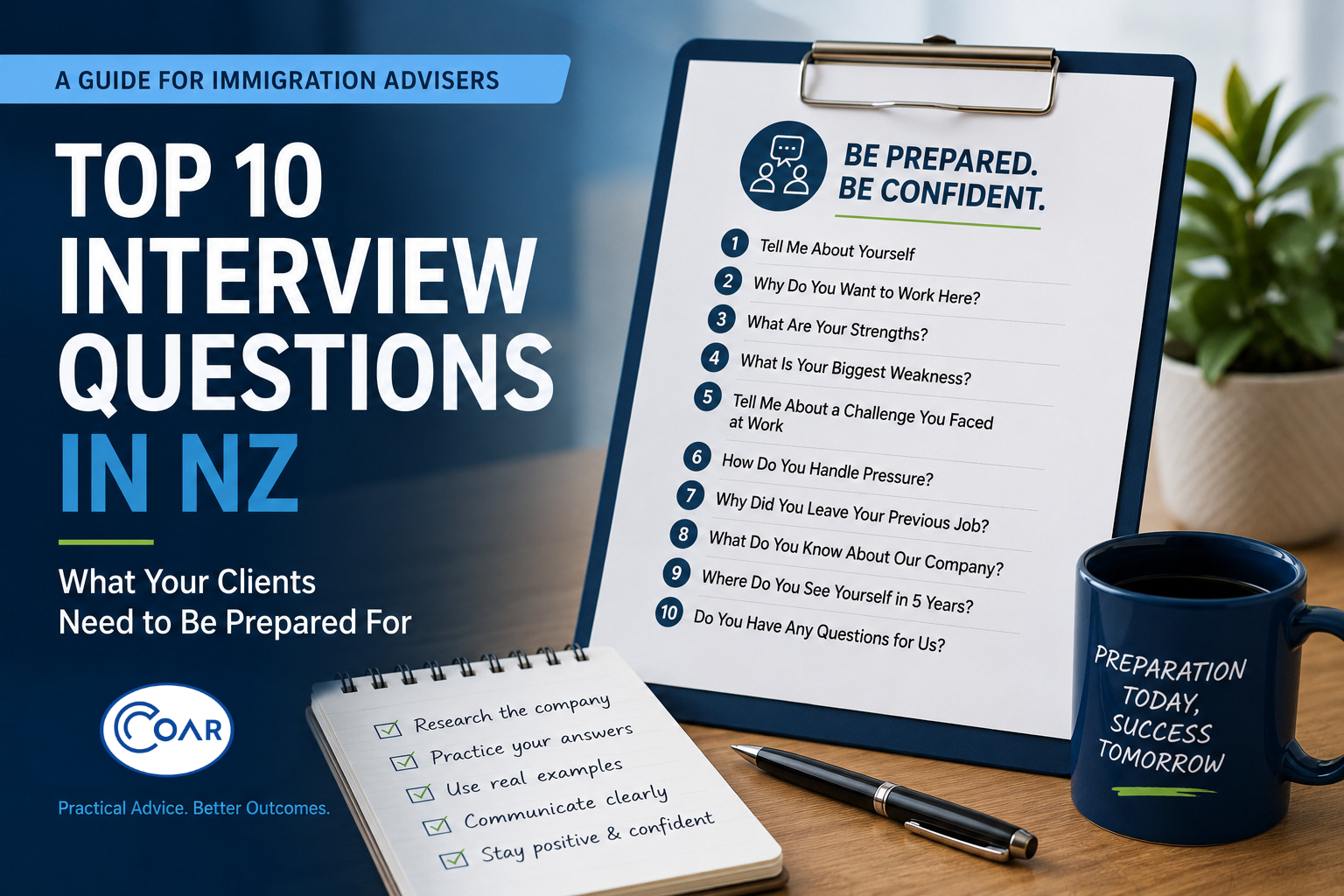
1. “Tell Me About Yourself”
This is one of the most common opening questions.
Many candidates either:
Give too much personal information
Repeat their entire CV
Become nervous and unfocused
What Employers Want
A short professional summary covering:
Current role or background
Relevant experience
Key skills
Career goals
I also recommend a short personal summary of your personal life - status, interests and future development
EG. I am married with two young children (7 and 9 years old) and am an avid runner and have completed my first half marathon recently. On weekends we enjoy going for picnics or walks to get outdoors and enjoy nature. (this shows you have interests outside of work and can hold lunch break conversations and fit in with the team.)
Better Structure
Profession/background
Years of experience
Main strengths
Why you are interested in the role
Example:
I have several years of experience in administration and customer service, primarily within fast-paced office environments. I enjoy organisation, working with people, and problem-solving, and I’m now looking to continue building my career in New Zealand.
2. “Why Do You Want to Work Here?”
This question assesses:
Motivation
Preparation
Genuine interest
Weak answers often include:
“I need a job”
“I need sponsorship”
“The pay is good”
Encourage Clients To:
Mention the company
Reference the role
Highlight alignment with their skills or interests
Example:
I’m interested in this role because it aligns closely with my customer service background, and I appreciate your company’s focus on teamwork and client support.
3. “What Are Your Strengths?”
Many migrants struggle to speak confidently about themselves.
Some become overly modest, while others list vague qualities without examples.
Better Approach
Encourage clients to focus on:
Relevant strengths
Workplace skills
Real examples and success stories
Examples:
Communication
Reliability
Organisation
Problem-solving
Adaptability
Teamwork
Specific examples make answers stronger.
4. “What Is Your Biggest Weakness?”
This question often creates panic.
Employers are usually assessing:
Self-awareness
Honesty
Willingness to improve
What Clients Should Avoid
Saying they have no weaknesses
Mentioning major issues that affect the role
Being overly negative
Better Approach
Mention a genuine but manageable weakness along with improvement efforts.
Example:
Earlier in my career I sometimes struggled with delegating tasks because I preferred handling everything myself, but I’ve been improving by learning to communicate more effectively within teams.
5. “Tell Me About a Challenge You Faced at Work”
NZ employers frequently use behavioural interview questions.
These assess:
Problem-solving
Communication
Workplace behaviour
Emotional maturity
Helpful Method: STAR
Encourage clients to structure answers using:
Situation
Task
Action
Result
This helps answers stay clear and organised.
6. “How Do You Handle Pressure or Difficult Situations?”
Employers want reassurance that candidates can remain professional under stress.
Strong Answers Often Include:
Staying calm
Prioritising tasks
Communicating clearly
Problem-solving
Asking for support when needed
Practical examples strengthen credibility.
7. “Why Did You Leave Your Previous Job?”
This question can feel sensitive, especially for migrants navigating relocation or visa-related transitions.
Important Advice
Clients should avoid:
Speaking negatively about previous employers
Complaining emotionally
Sharing excessive personal details
Better Approach
Keep explanations professional and forward-focused.
Example:
I was looking for new growth opportunities and wanted to continue developing my career in New Zealand.
8. “What Do You Know About Our Company?”
This question tests preparation and genuine interest.
Many candidates skip research entirely.
Encourage clients to:
Review the company website
Understand the business
Learn about services or products
Read the job description carefully
Even basic preparation creates a stronger impression.
9. “Where Do You See Yourself in 5 Years?”
Employers are often assessing:
Ambition
Stability
Career direction
Clients do not need a perfect long-term plan.
A balanced answer might include:
Growing professionally
Building industry experience
Taking on more responsibility
Contributing long-term to a company
10. “Do You Have Any Questions for Us?”
Many migrants mistakenly say:
“No, thank you.”
But asking thoughtful questions demonstrates:
Interest
Engagement
Professionalism
Good Questions Include:
What does success look like in this role?
What are the next steps in the process?
What do you enjoy most about working here?
What training opportunities are available?
Encourage clients to prepare questions before interviews.
Common Interview Mistakes Migrants Make
Immigration advisers often see clients struggle with:
Speaking too little
Speaking too much
Lack of confidence
Overly formal communication
Avoiding eye contact
Not preparing examples
Memorised robotic answers
Focusing too heavily on sponsorship
Preparation and practice can greatly improve performance.
How Immigration Advisers Can Better Support Clients
Helping clients prepare for interviews can:
Build confidence
Improve communication
Reduce anxiety
Increase interview success rates
Improve settlement outcomes
Even basic interview coaching can make a major difference for migrants unfamiliar with NZ workplace expectations.

Final Thoughts
Job interviews in New Zealand are about more than technical skills.
Employers are often looking for:
Communication
Professionalism
Reliability
Teamwork
Attitude
Confidence
Many migrants already have the skills and experience employers need, they simply need support in presenting themselves effectively during interviews.
By helping clients prepare for common NZ interview questions, immigration advisers can play an important role in improving employment outcomes, confidence, and long-term settlement success.