Understanding Immigration Stress with our Migrant Relocation Pack
What Newcomers to New Zealand Need to Know. Immigrating to New Zealand is a major life decision filled with opportunity, change, and often a fair amount of uncertainty. While the journey can be incredibly rewarding, it also comes with emotional, practical, and psychological challenges.
Recognising these stressors early and preparing for them can make the transition smoother for individuals and families alike.
This guide outlines the key factors that influence the immigration experience, the cycles of adjustment most newcomers go through, and strategies to navigate them with confidence.
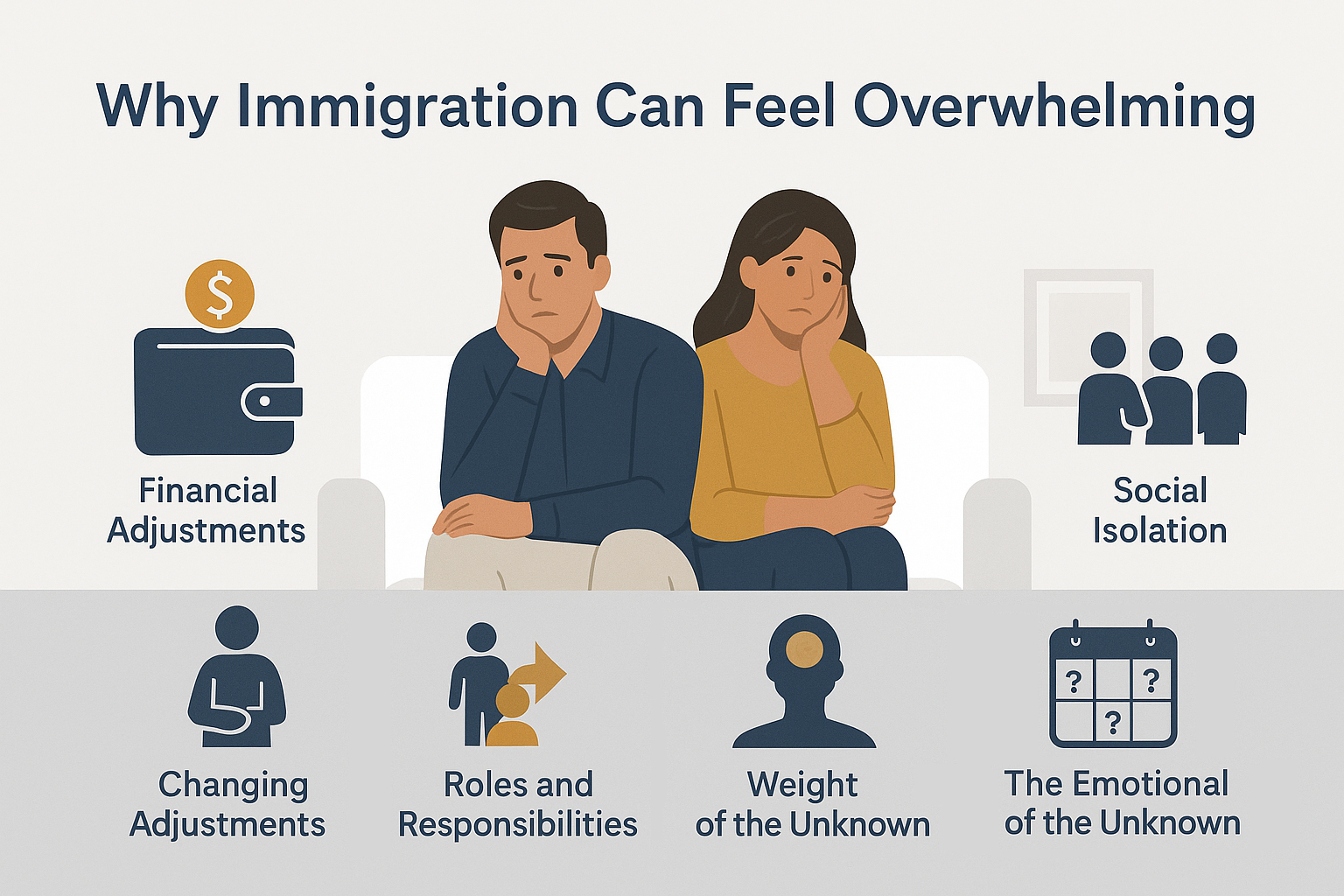
Why Immigration Can Feel Overwhelming
Relocating to a new country requires adapting to unfamiliar systems, new social dynamics, and a completely different way of life. Even when the move is planned and deeply wanted, it still disrupts routines, social circles, and personal identity. Most immigrants experience pressure in the following areas:
1. Financial Adjustments
Budgeting in a new economy can be challenging. Costs such as rent, groceries, transport, and childcare may differ significantly from your country of origin. Securing work or waiting on visa outcomes can add to the pressure.
2. Changing Roles and Responsibilities
Couples or families often experience a shift in duties and expectations. One partner may be working while the other manages the home. Children may need extra support adjusting to school, language, or cultural differences. These changes can strain even strong relationships unless openly discussed.
3. Social Isolation
Leaving friends, family, and familiar support networks behind can lead to loneliness. Building new connections takes time, and many newcomers underestimate how much this impacts their emotional wellbeing.
4. Identity and Confidence
Immigrants often experience a temporary decline in confidence. You may feel unsure of how to navigate systems, understand local norms, or communicate in culturally appropriate ways. This is a normal psychological response to major change.
5. The Emotional Weight of the Unknown
Uncertainty around visas, housing, employment, and long-term settlement adds a layer of persistent stress. When too many unknowns stack up, it can feel like pressure is coming from every direction.
The Immigration Stress Cycle
Most newcomers move through predictable emotional and psychological phases. Understanding these cycles can help you recognise where you are and respond proactively.
Year 1: The Three-Month Cycles
During the first year, immigrants often move through repeated 3-month emotional phases:
● Months 1–3: Excitement, discovery, and optimism
● Months 4–6: Fatigue as challenges become clearer
● Months 7–9: Resistance or doubt, often questioning the decision
● Months 10–12: Stabilisation and gradual improvement
These cycles are normal. They reflect your brain adapting to a significantly new environment.
Year 2: The Six-Month Cycles
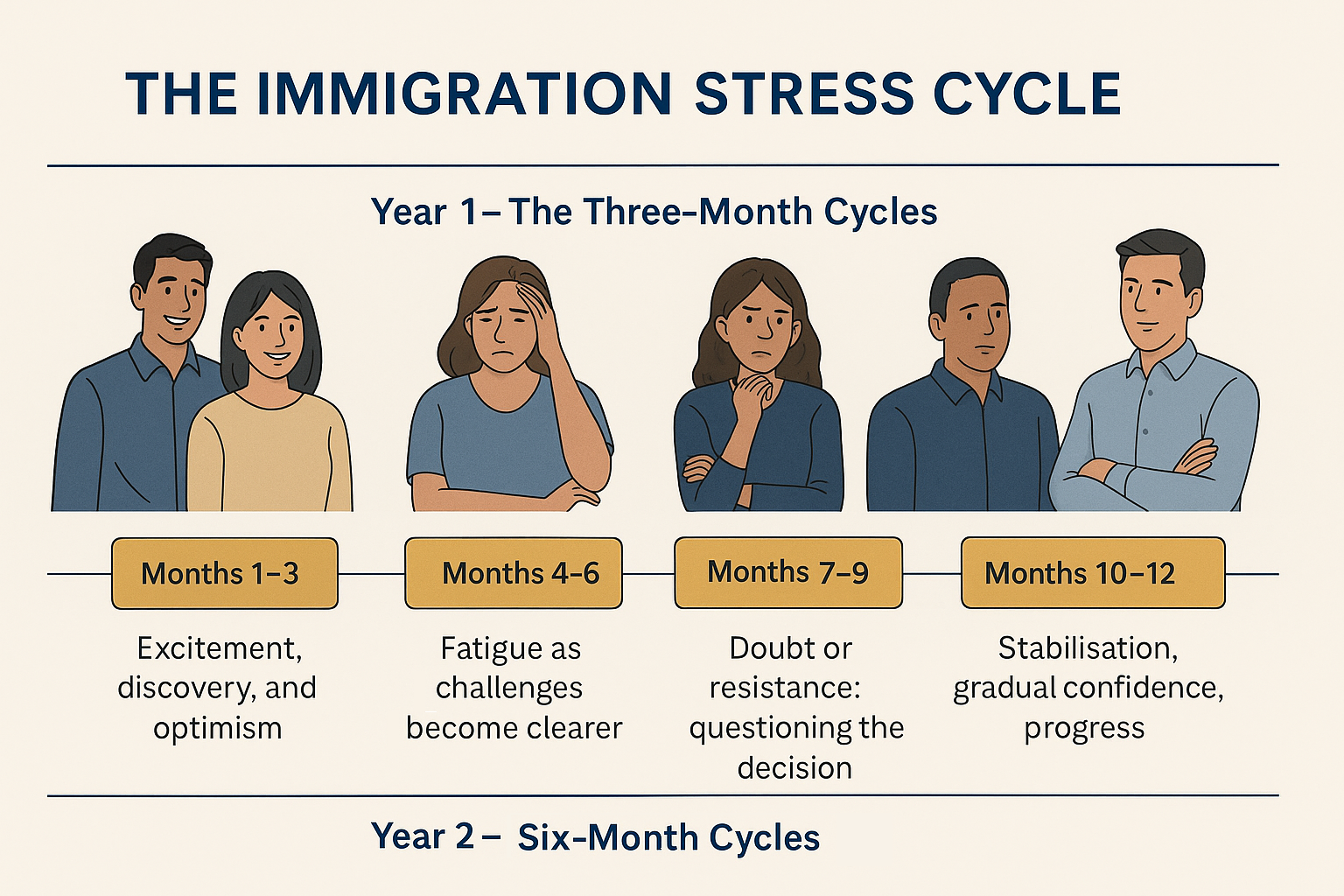
By year two, the adjustment cycles slow down. Emotional ups and downs still occur, but they spread out over 6-month periods. This is where many immigrants begin to feel more settled, more confident, and more connected.
Common Sources of Relationship Stress
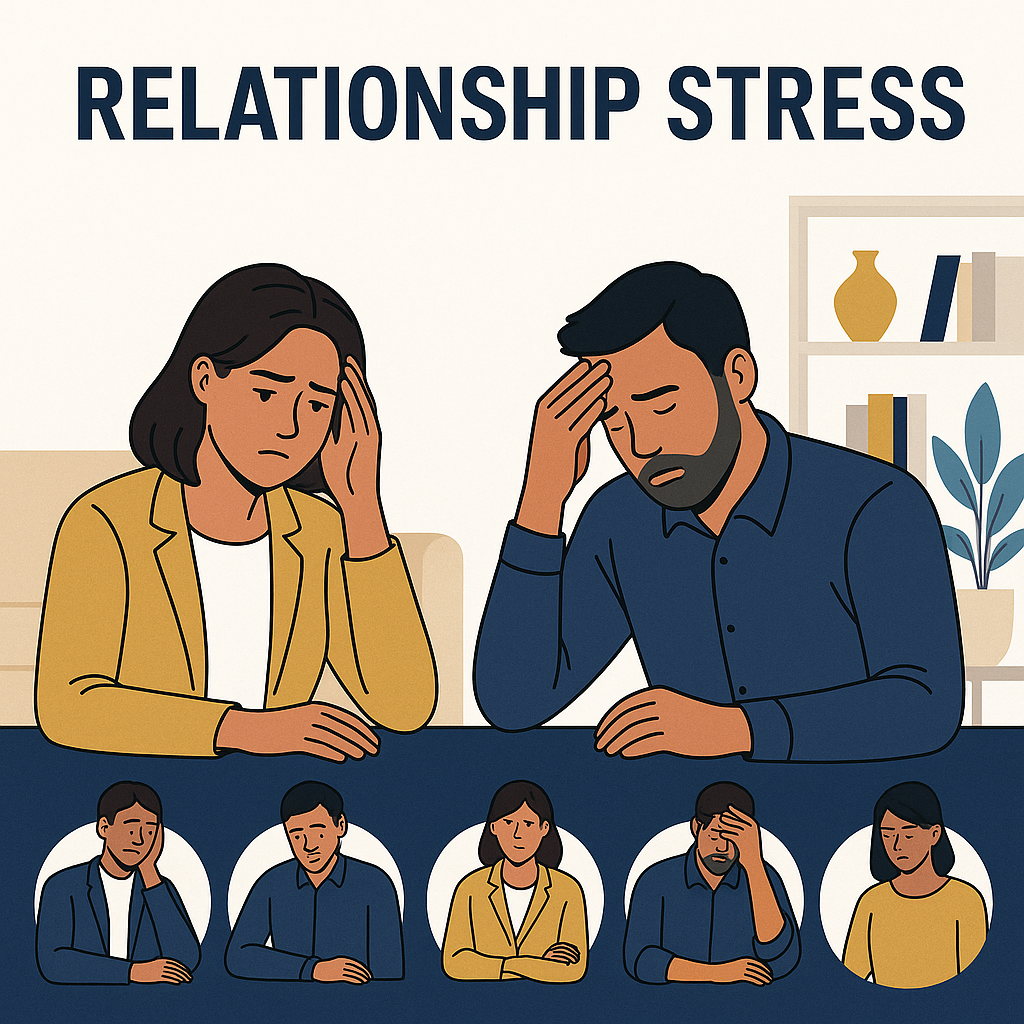
Immigration can place pressure on couples and families, particularly when:
● One partner feels overwhelmed while the other is coping differently
● Financial strain creates tension
● Support systems are limited
● Roles shift without clear communication
● Cultural expectations differ from what you’re used to
It is not uncommon for couples to feel disconnected during the transition. Studies show that immigration-related stress impacts even strong relationships, but open conversation and shared planning can reduce the strain.
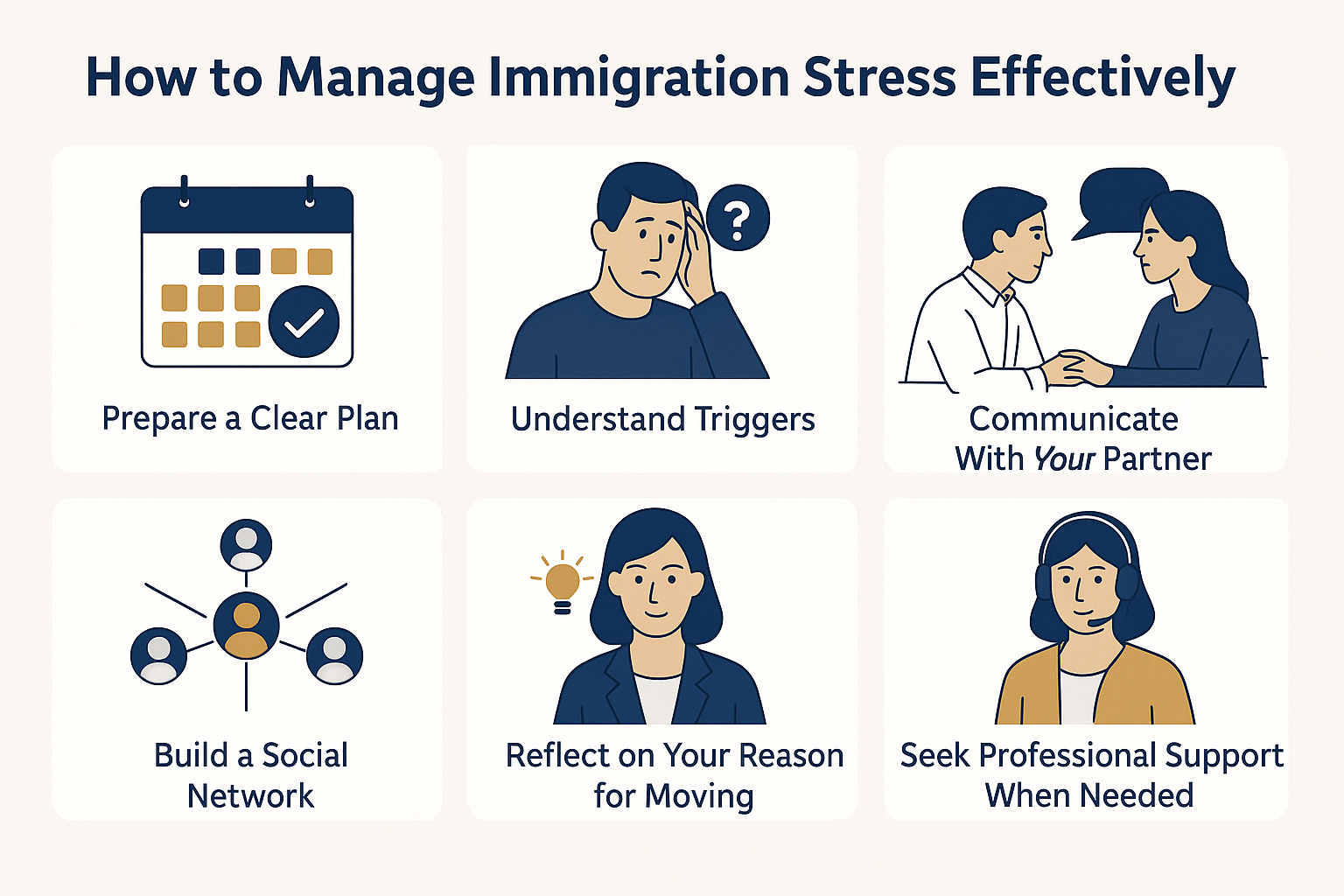
How to Manage Immigration Stress Effectively
1. Prepare a Clear Plan
Having a roadmap reduces fear of the unknown. Make lists, set priorities, and create weekly or monthly goals. A clear plan restores a sense of control.
2. Understand Triggers
Identify what causes your stress: finances, work, children, communication, social isolation, or something else. Awareness is the first step in managing overwhelm.
3. Communicate With Your Partner
Talk openly about expectations and emotions. It is normal to experience highs and lows at different times. Listening without judgement can prevent misunderstandings.
4. Build a Social Network
Join local groups, attend community events, connect with other immigrants, or participate in online communities. Feeling supported reduces the emotional load dramatically.
5. Reflect on Your Reason for Moving
Your purpose is your anchor. Whether it’s safety, opportunity, education, or a better life for your children, reminding yourself of your “why” helps keep challenges in perspective.
6. Seek Professional Support When Needed
If stress becomes overwhelming, reaching out to counsellors, settlement services, or community organisations can provide practical guidance and emotional relief.
A Worthwhile Journey
Immigration is not only a practical transition but an emotional and psychological one. Understanding how stress builds and how the adjustment cycles work can help you feel more prepared and less alone in the process. With the right tools and support, you can navigate the challenges, strengthen your relationships, and create a meaningful new chapter in New Zealand.
Gentle COAR Call-to-Action
Contact us to learn more - peter@coar.co.nz or Whats app - +64 27 475 5620