Why Confidence Matters for Migrant Success, and How Advisers Can Help Build It
Introduction: Confidence Is Often the Missing Piece When migrants move to a new country, the focus is usually placed on practical challenges: Visas Employment Housing Finances Documentation Settling children into school One of the biggest factors influencing long-term success is often overlooked.
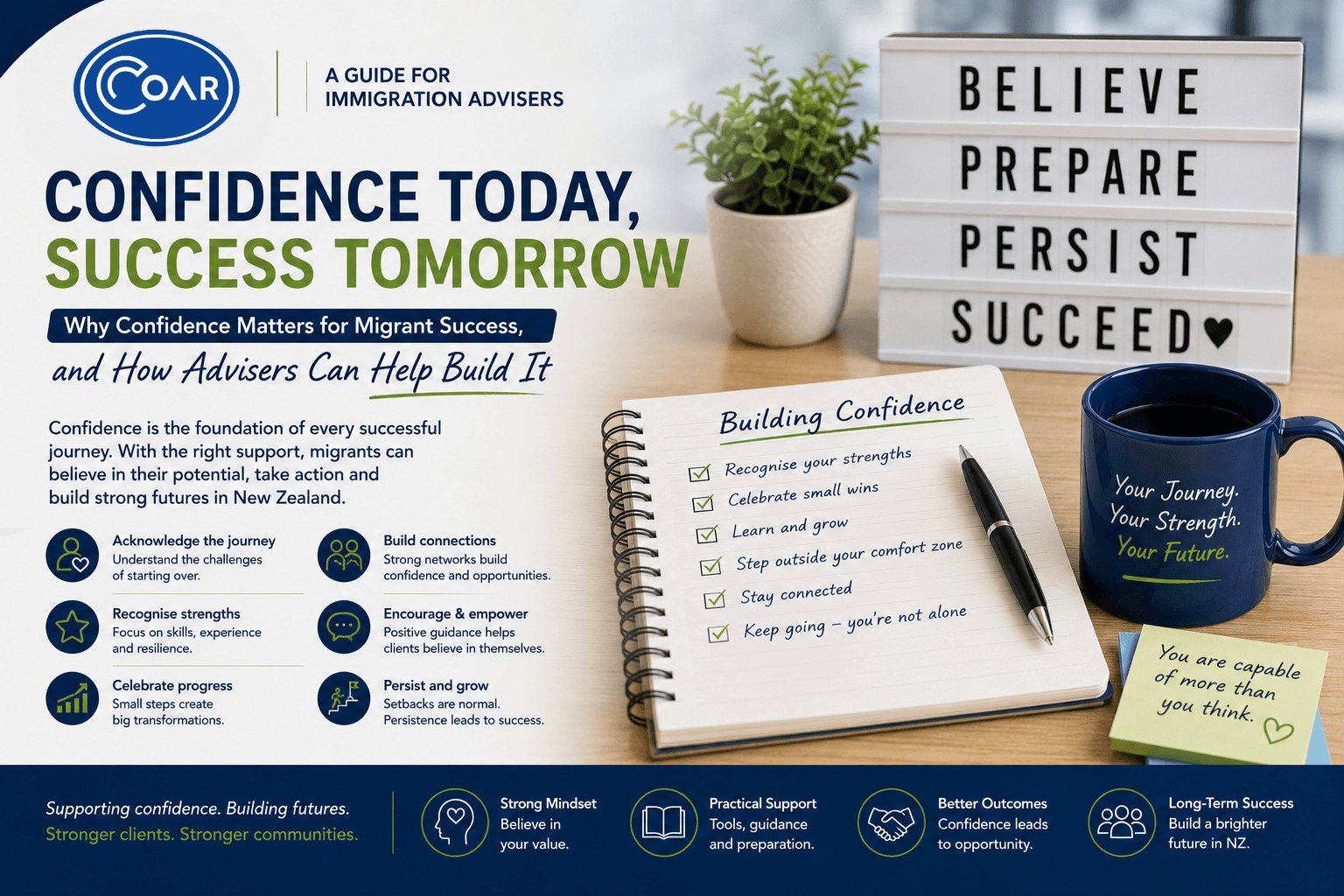
Many migrants arrive in New Zealand highly skilled, experienced, and capable, yet still struggle because relocation can quietly affect self-belief, identity, and emotional resilience.
For immigration advisers, understanding the role confidence plays in settlement success can help create more meaningful support for clients navigating major life transitions.
Why Migration Often Impacts Confidence
Migration involves far more than changing countries.
For many people, it also means:
Leaving support systems behind
Starting careers over
Adapting to a different culture
Communicating in a second language
Losing professional status temporarily
Navigating unfamiliar systems
Facing uncertainty and rejection
Even confident professionals may suddenly begin questioning themselves in environments that feel unfamiliar.
This can affect:
Communication
Decision-making
Job searching
Networking
Parenting confidence
Social interaction
Overall wellbeing
Many Migrants Feel Like They Are “Starting From Zero”
A common emotional challenge for migrants is feeling disconnected from their previous achievements.
Clients who once held respected positions may suddenly find themselves:
Struggling to get interviews
Taking lower-level jobs
Being questioned about local experience
Feeling invisible professionally
Doubting their abilities
This can create frustration, embarrassment, and discouragement.
Immigration advisers who recognise this emotional adjustment can provide far more supportive and effective guidance.
Why Confidence Directly Affects Settlement Success
Confidence influences almost every area of settlement.
Clients with stronger confidence are generally more likely to:
Apply for opportunities
Attend interviews
Network professionally
Ask questions
Advocate for themselves
Build relationships
Adapt to challenges
Stay motivated after setbacks
Low confidence, on the other hand, can lead to:
Isolation
Fear of rejection
Avoiding opportunities
Reduced communication
Increased anxiety
Difficulty adjusting socially and professionally
Confidence is not simply emotional, it has practical consequences.
How Immigration Advisers Can Help Build Confidence
Immigration advisers are often among the first professionals migrants trust during major life transitions.
The way advisers communicate and support clients can significantly influence confidence levels.
1. Acknowledge the Difficulty of Starting Over
Many migrants feel pressure to appear strong and positive at all times.
Simply acknowledging that relocation is challenging can help clients feel understood.
This does not mean focusing on negativity.
It means recognising that:
Adjustment takes time
Career rebuilding can be difficult
Feeling uncertain is common
Confidence may fluctuate during settlement
Balanced reassurance helps reduce feelings of isolation.
2. Help Clients Recognise Their Existing Strengths
Migrants often focus heavily on what they lack:
NZ experience
Local references
Professional networks
Familiarity with systems
Immigration advisers can help clients refocus on what they already bring:
Qualifications
International experience
Adaptability
Resilience
Multicultural communication skills
Work ethic
Technical expertise
These strengths are valuable and transferable.
3. Encourage Small, Achievable Progress
Confidence often grows gradually through consistent small wins.
Encourage clients to celebrate progress such as:
Updating a CV
Creating a LinkedIn profile
Attending a networking event
Completing a course
Securing an interview
Improving communication confidence
Progress builds momentum over time.
4. Support Employment Readiness
Employment challenges are one of the biggest confidence triggers for migrants.
Practical support can make a major difference.
This may include guidance around:
CVs
LinkedIn profiles
Interview preparation
Networking
Understanding NZ workplace culture
Recruiter expectations
Prepared clients often feel more empowered and capable.
5. Encourage Clients to Build Connections
Isolation can quickly damage confidence.
Many migrants arrive without:
Family support
Professional networks
Friendships
Community connections
Encouraging clients to engage with:
Professional groups
Community organisations
Networking opportunities
Parent groups
Cultural communities
can help improve both emotional wellbeing and settlement success.
6. Use Constructive and Empowering Language
The way advisers communicate matters.
While honesty is important, overly negative messaging can unintentionally increase fear and self-doubt.
For example:
Instead of:
“It’s extremely difficult for migrants to find jobs.”
A more balanced approach may be:
“The NZ job market can be competitive, but preparation, networking, and persistence can improve opportunities significantly.”
Confidence grows when challenges are framed realistically but constructively.
7. Help Clients Understand That Setbacks Are Normal
Many migrants interpret setbacks as personal failure.
But difficulties during settlement are extremely common.
Clients may face:
Job rejection
Delays
Career changes
Financial pressure
Social adjustment challenges
These experiences do not mean they are failing.
Helping clients normalise setbacks can reduce shame and hopelessness.
Confidence Also Impacts Families
When migrants lose confidence, it often affects the entire household.
Stress and uncertainty can influence:
Relationships
Parenting
Financial wellbeing
Emotional health
Children’s adjustment
Supporting client confidence therefore contributes to broader family stability and wellbeing.
Why This Matters for Immigration Firms
Immigration firms that support clients holistically build stronger long-term relationships.
Confidence-focused support can:
Improve settlement outcomes
Strengthen trust
Increase referrals
Improve client satisfaction
Differentiate services from competitors
Clients often remember how professionals made them feel during vulnerable periods of transition.
Final Thoughts
Confidence is one of the most important and most overlooked, parts of successful migration.
Many migrants arrive in New Zealand with the skills, experience, and determination to succeed, but relocation can temporarily affect confidence and identity in powerful ways.
With practical guidance, encouragement, and supportive communication, immigration advisers can help clients:
Rebuild professional confidence
Navigate challenges more effectively
Stay motivated during setbacks
Engage more confidently with opportunities
Build stronger long-term futures in New Zealand
Sometimes, helping a migrant succeed starts with helping them believe in themselves again.