Why Your LinkedIn Headline Matters More Than Your CV (And How to Get It Right)
Most job seekers put a huge amount of effort into their CV. And understandably so. Your CV tells employers about your experience, skills and achievements. But your LinkedIn profile plays a different role, it helps people understand who you are professionally, what you do and where you’re heading.
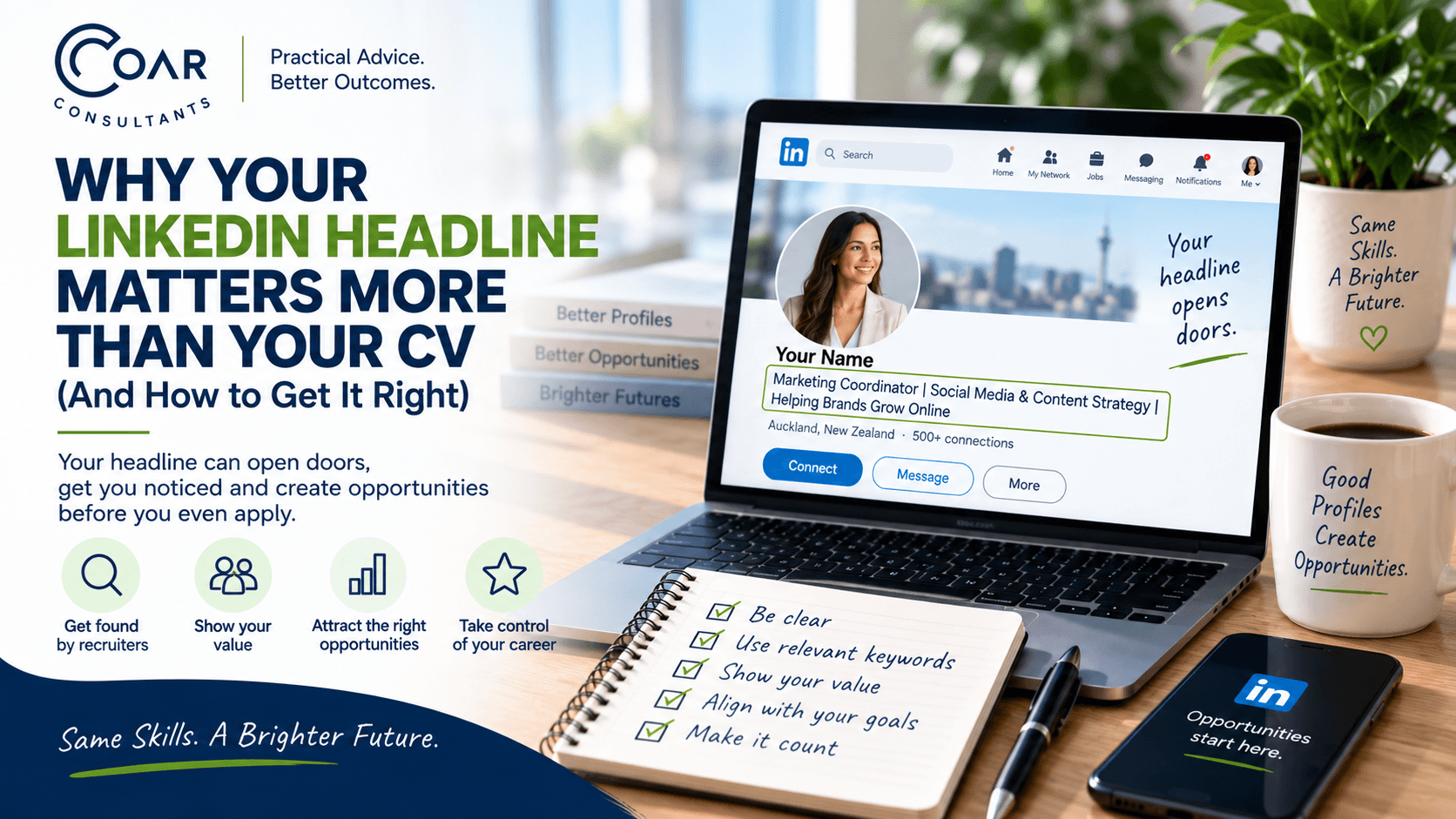
And one of the first things people notice when they visit your profile?
Your LinkedIn headline.
If your headline is unclear, too generic or doesn't reflect the type of work you're looking for, you could be making it harder for people to understand your value.
The good news?
Your headline is one of the easiest parts of your LinkedIn profile to improve.
Your Headline Is Your First Impression
When someone comes across your LinkedIn profile, your headline is one of the first pieces of information they see.
It sits directly beneath your name and helps provide context before someone reads your About section, experience or education.
Your headline can help answer an important question:
“What does this person actually do?”
A strong headline makes that answer clear.
A vague one can leave people guessing.
And when you're trying to build your professional presence, clarity matters.
“Open to Work” Isn't a Strategy
Many job seekers use headlines such as:
“Open to work”
“Seeking opportunities”
“Looking for my next opportunity”
There's nothing wrong with being open about looking for work.
But these phrases don't tell someone much about you.
They don't explain:
What you do
What you're experienced in
What you're good at
What type of role you're looking for
What value you can bring
Instead of using your headline to simply announce that you're looking for work, use it to position yourself professionally.
For example:
Instead of:
Hardworking professional seeking opportunities
Try:
Marketing Coordinator | Social Media & Content Strategy | Helping Brands Grow Online
The second headline immediately gives the reader more useful information.
Clarity Always Wins Over Creativity
You don't need a clever or complicated headline.
You need a clear one.
A strong headline should help communicate:
Who you are.
What you do.
What you're good at.
Where you want to go.
Think about the words someone in your industry would use when describing your profession.
Then use those words naturally in your headline.
For example:
Project Manager | Construction & Infrastructure | Project Delivery | Stakeholder Management
is much clearer than:
Experienced Professional | Results Driven | Passionate About Success
The second version sounds positive, but it doesn't tell the reader what you actually do.
Your headline isn't the place to be vague.
Make it easy for people to understand where you fit.
Keywords Can Help People Find You
LinkedIn can function like a search tool.
Recruiters and hiring managers may search for specific skills, job titles, industries or areas of expertise when looking for potential candidates.
That means the words you use in your headline matter.
If you're a civil engineer, for example, simply writing:
Experienced Professional | Open to Work
doesn't communicate nearly as much as:
Civil Engineer | Infrastructure & Transport | Project Delivery | Site & Stakeholder Management
Your headline should naturally include relevant keywords that genuinely describe your experience and career direction.
Don't fill your headline with every keyword you can think of.
Choose the ones that matter most.
Your Headline Should Reflect Where You're Going
One common mistake is creating a headline based entirely on your previous job title.
But what if you're changing careers?
What if you're moving into a different industry?
Or what if you're a migrant with years of international experience who wants to establish yourself in the New Zealand or Australian job market?
Your LinkedIn headline can reflect where you're heading, not just where you've been.
For example, if your previous role was:
Financial Analyst
but you're now targeting:
Business Analyst
you can structure your headline to communicate relevant transferable skills and your career direction.
Your headline should help position you for the right opportunities, rather than simply describe your last job.
You Don't Need New Zealand Experience to Have a Strong Headline
For migrants, this is particularly important.
You may not have local experience yet.
That doesn't mean you don't have valuable experience.
You may already have years of:
Industry knowledge
Technical skills
Leadership experience
Project experience
International experience
Transferable skills
Your LinkedIn headline should focus on what you bring to the table, rather than allowing your current situation to define your professional identity.
Instead of:
International Professional | Looking for NZ Opportunities
consider how you could communicate your actual profession and expertise.
For example:
Senior Supply Chain Specialist | Procurement | Logistics | Operations | International Experience
Your location and job-search status can be part of your wider LinkedIn strategy. They don't need to replace your professional positioning.
A Strong Headline Can Support Your Job Search Before You Apply
Your LinkedIn profile doesn't only matter when you're applying for a specific vacancy.
It can also help you build your professional visibility and communicate what you do to people who come across your profile.
A clear, targeted headline can make it easier for people to:
Understand your professional background
Identify your area of expertise
Recognise the types of roles you're interested in
Connect your experience with relevant opportunities
See the value you could bring
This is one way LinkedIn can become more than a digital CV.
It can become part of your wider job-search strategy.
You're Not Invisible , You Might Just Be Unclear
If you're not getting many profile views, messages or relevant connections, it's easy to assume that something is wrong with your experience.
But sometimes the problem isn't your experience.
It may simply be how clearly you're presenting it.
Ask yourself:
If someone saw only my name, photo and headline, would they understand what I do?
If the answer is no, your headline may need some work.
And that's something you can change.
You Don't Have to Figure This Out Alone
Knowing how to position yourself professionally isn't always obvious, especially when you're trying to describe your own experience.
Sometimes it's difficult to see your strengths because you're too close to them.
With the right support, you can:
Create a headline that reflects your skills and career direction
Communicate your value more clearly
Use relevant keywords naturally
Build a LinkedIn profile that supports your wider job search
Feel more confident about how you're presenting yourself
Your headline is only one part of your LinkedIn profile.
But getting it right can make the rest of your profile much easier for people to understand.
Small Changes Can Make a Big Difference
Your LinkedIn headline is a relatively small section of your profile.
But it has an important job.
It should quickly communicate who you are, what you do and where you're heading.
You don't need to sound impressive.
You need to be clear, relevant and authentic.
So take a look at your headline today.
Ask yourself:
“If a recruiter or hiring manager saw this headline, would they immediately understand what I could bring to their organisation?”
If not, it may be time for a change.

Ready to strengthen your LinkedIn profile?
📅 Book a free 20-minute consultation with COAR Consultants to optimise your LinkedIn profile and develop a more focused strategy for your job search.
Same skills. A brighter future.